<?xml version="1.0" encoding="UTF-8"?>
<news xmlns="http://coastobs.eu" xmlns:xsi="http://www.w3.org/2001/XMLSchema-instance" xsi="http://coastobs.eu/news/page/3.xsi">
  <items>
    <news>
      <newsId>12</newsId>
      <date>
        <date>2019-04-01 16:00:00.000000</date>
        <timezone_type>3</timezone_type>
        <timezone>UTC</timezone>
      </date>
      <publishingDate/>
      <expirationDate/>
      <thumbnail>news/DSC_3829_b.1280.jpg</thumbnail>
      <status>published</status>
      <uuid>90ae5936-5486-11e9-81ef-e0071b8a4064</uuid>
      <updated>
        <date>2019-04-01 16:24:48.000000</date>
        <timezone_type>3</timezone_type>
        <timezone>UTC</timezone>
      </updated>
      <alpha3>eng</alpha3>
      <subject>User meeting in Bourgneuf Bay</subject>
      <slug/>
      <lead><![CDATA[<p><em>@By Laurent Barille</em></p>
<p>
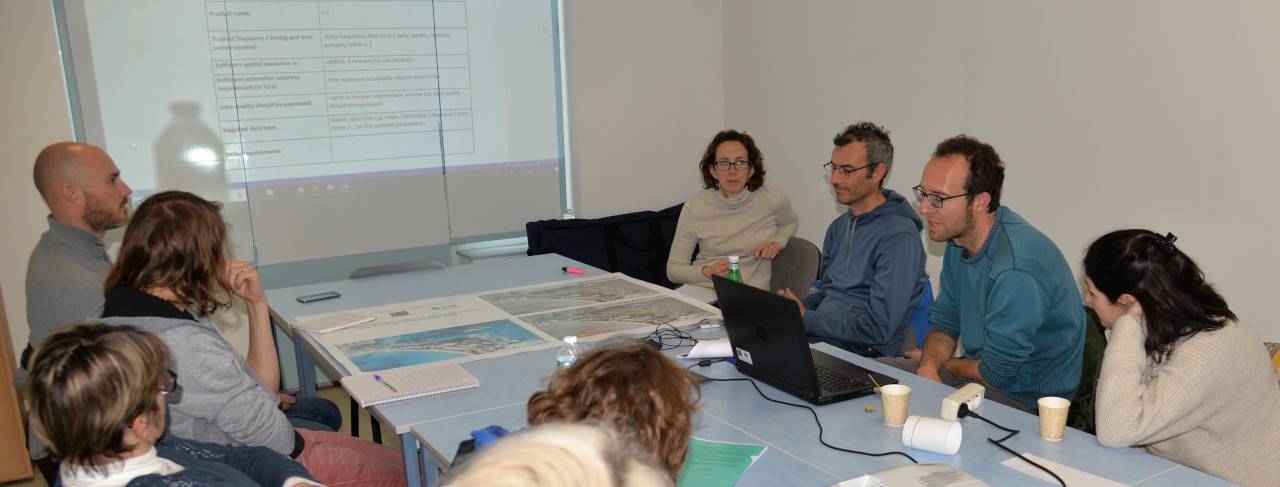
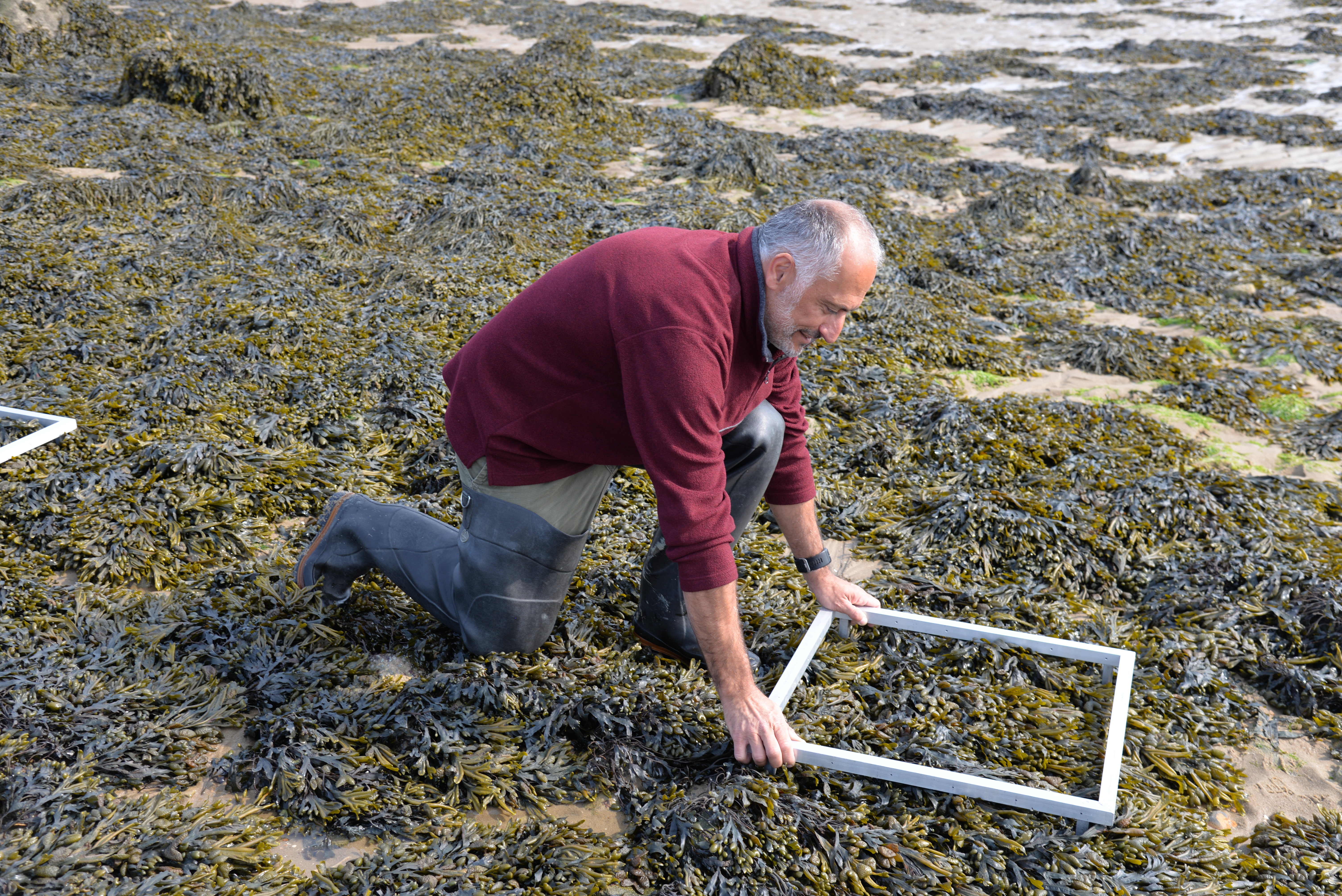
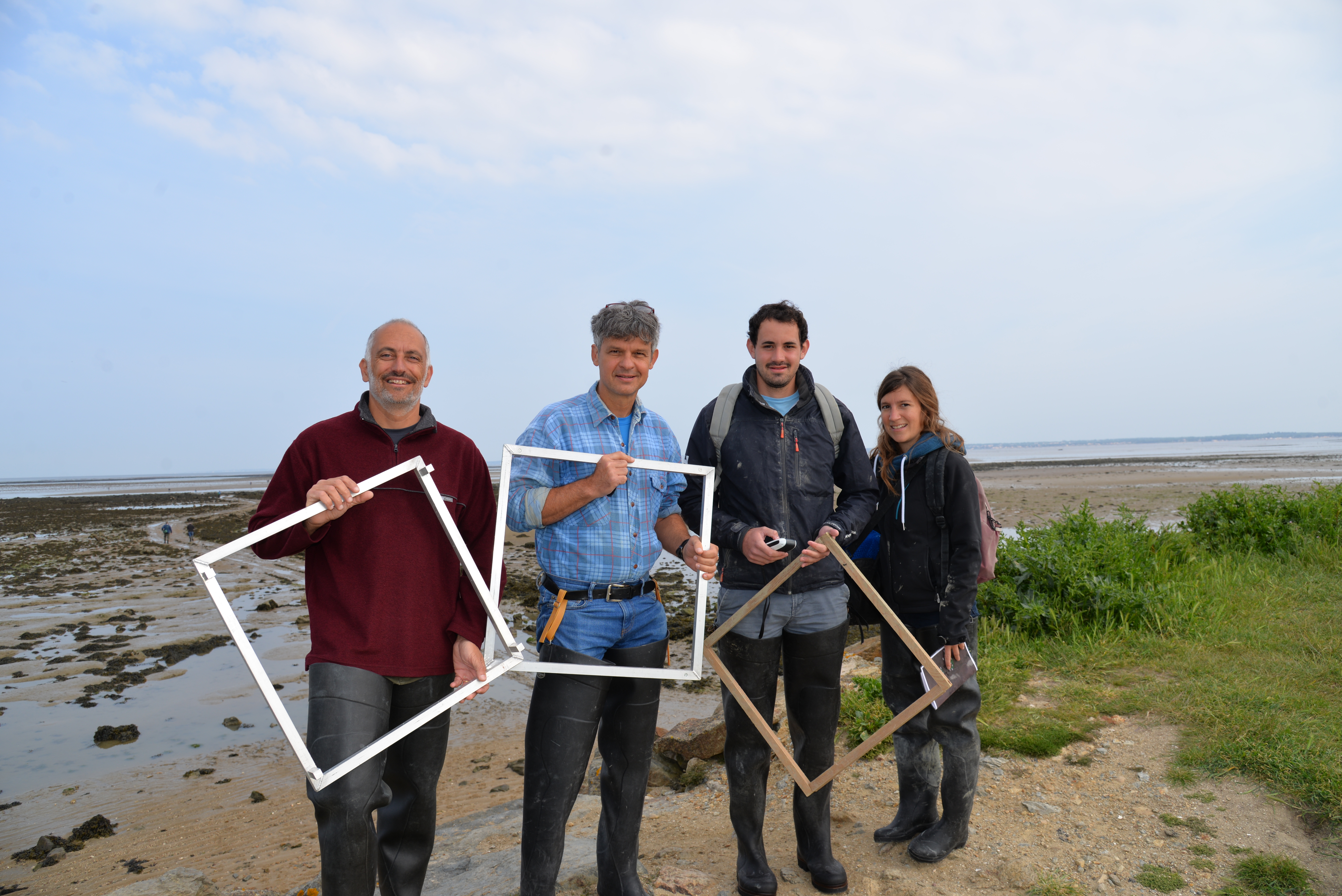
University of Nantes and Biolittoral have met end-users on the 19th and 21th of March to deliver WP3 intertidal seagrass products from CoastObs case-study in Bourgneuf Bay.
</p>]]></lead>
      <content><![CDATA[<p>
They were respectively representatives of the Maritime Affairs administration, of an environmental association (ADBVBB), of the fishermen (COREPEM) and the shellfish industry (CRC). After a brief reminder of CoastObs objectives, there was a technical presentation of the products : seagrass % cover and biomass spatial distribution maps.  A particular attention was devoted to the explanation of how calibration and validation were obtained. Each end-user was provided with a poster and files compatibles with GIS software and Google Earth. The feed-back questionnaire was detailed as well as CoastObs expectations. Some users already mentioned their interest for others products such as wild shellfish beds.
</p>
<p>
<img src="/assets/content/news/DSC_3830_b.1280.jpg" class="img-responsive" />
</p>
<p>
<img src="/assets/content/news/DSC_3832_b.1280.jpg" class="img-responsive" />
</p>
<p>
<img src="/assets/content/news/DSC_3833b.1280.jpg" class="img-responsive" />
</p>]]></content>
      <uri>/news/12/user-meeting-in-bourgneuf-bay</uri>
      <newsContent>
        <newsContent>
          <newsId>12</newsId>
          <alpha3>eng</alpha3>
          <subject>User meeting in Bourgneuf Bay</subject>
          <slug/>
          <lead><![CDATA[<p><em>@By Laurent Barille</em></p>
<p>
University of Nantes and Biolittoral have met end-users on the 19th and 21th of March to deliver WP3 intertidal seagrass products from CoastObs case-study in Bourgneuf Bay.
</p>]]></lead>
          <content><![CDATA[<p>
They were respectively representatives of the Maritime Affairs administration, of an environmental association (ADBVBB), of the fishermen (COREPEM) and the shellfish industry (CRC). After a brief reminder of CoastObs objectives, there was a technical presentation of the products : seagrass % cover and biomass spatial distribution maps.  A particular attention was devoted to the explanation of how calibration and validation were obtained. Each end-user was provided with a poster and files compatibles with GIS software and Google Earth. The feed-back questionnaire was detailed as well as CoastObs expectations. Some users already mentioned their interest for others products such as wild shellfish beds.
</p>
<p>
<img src="/assets/content/news/DSC_3830_b.1280.jpg" class="img-responsive" />
</p>
<p>
<img src="/assets/content/news/DSC_3832_b.1280.jpg" class="img-responsive" />
</p>
<p>
<img src="/assets/content/news/DSC_3833b.1280.jpg" class="img-responsive" />
</p>]]></content>
          <updated>
            <date>2019-04-01 16:24:48.000000</date>
            <timezone_type>3</timezone_type>
            <timezone>UTC</timezone>
          </updated>
        </newsContent>
        <newsContent>
          <newsId>12</newsId>
          <alpha3>hun</alpha3>
          <subject/>
          <slug/>
          <lead/>
          <content/>
          <updated>
            <date>2019-04-01 16:00:54.000000</date>
            <timezone_type>3</timezone_type>
            <timezone>UTC</timezone>
          </updated>
        </newsContent>
      </newsContent>
    </news>
    <news>
      <newsId>11</newsId>
      <date>
        <date>2018-12-13 09:27:13.000000</date>
        <timezone_type>3</timezone_type>
        <timezone>UTC</timezone>
      </date>
      <publishingDate/>
      <expirationDate/>
      <thumbnail>news/Jesus_mussel_meeting.jpg</thumbnail>
      <status>published</status>
      <uuid>e245b1b3-d85e-4c3e-92e9-749b39fac47f</uuid>
      <updated>
        <date>2019-07-23 14:32:30.000000</date>
        <timezone_type>3</timezone_type>
        <timezone>UTC</timezone>
      </updated>
      <alpha3>eng</alpha3>
      <subject>User meeting with the Regulatory Council of Mussel from Galicia </subject>
      <slug/>
      <lead>This week our partner The University of Vigo met with the&amp;nbsp;Regulatory Council of Mussel from Galicia, and agreed on&amp;nbsp;collaborating in CoastObs with data exchange and future meetings.</lead>
      <content/>
      <uri>/news/11/user-meeting-with-the-regulatory-council-of-mussel-from-galicia</uri>
      <newsContent>
        <newsContent>
          <newsId>11</newsId>
          <alpha3>eng</alpha3>
          <subject>User meeting with the Regulatory Council of Mussel from Galicia </subject>
          <slug/>
          <lead>This week our partner The University of Vigo met with the&amp;nbsp;Regulatory Council of Mussel from Galicia, and agreed on&amp;nbsp;collaborating in CoastObs with data exchange and future meetings.</lead>
          <content/>
          <updated>
            <date>2018-12-13 12:03:25.000000</date>
            <timezone_type>3</timezone_type>
            <timezone>UTC</timezone>
          </updated>
        </newsContent>
        <newsContent>
          <newsId>11</newsId>
          <alpha3>hun</alpha3>
          <subject/>
          <slug/>
          <lead/>
          <content/>
          <updated>
            <date>2018-12-13 12:03:25.000000</date>
            <timezone_type>3</timezone_type>
            <timezone>UTC</timezone>
          </updated>
        </newsContent>
      </newsContent>
    </news>
    <news>
      <newsId>10</newsId>
      <date>
        <date>2018-11-29 11:36:30.000000</date>
        <timezone_type>3</timezone_type>
        <timezone>UTC</timezone>
      </date>
      <publishingDate/>
      <expirationDate/>
      <thumbnail>news/Stirling_tower.JPG</thumbnail>
      <status>published</status>
      <uuid>545d68ce-68a1-4a2c-a941-f25b84345787</uuid>
      <updated>
        <date>2019-07-23 14:32:30.000000</date>
        <timezone_type>3</timezone_type>
        <timezone>UTC</timezone>
      </updated>
      <alpha3>eng</alpha3>
      <subject>CoastObs' birthday, project and review meeting </subject>
      <slug/>
      <lead><![CDATA[<p><em>@By CoastObs partner Mariana Mata Lara, Geonardo</em></p>

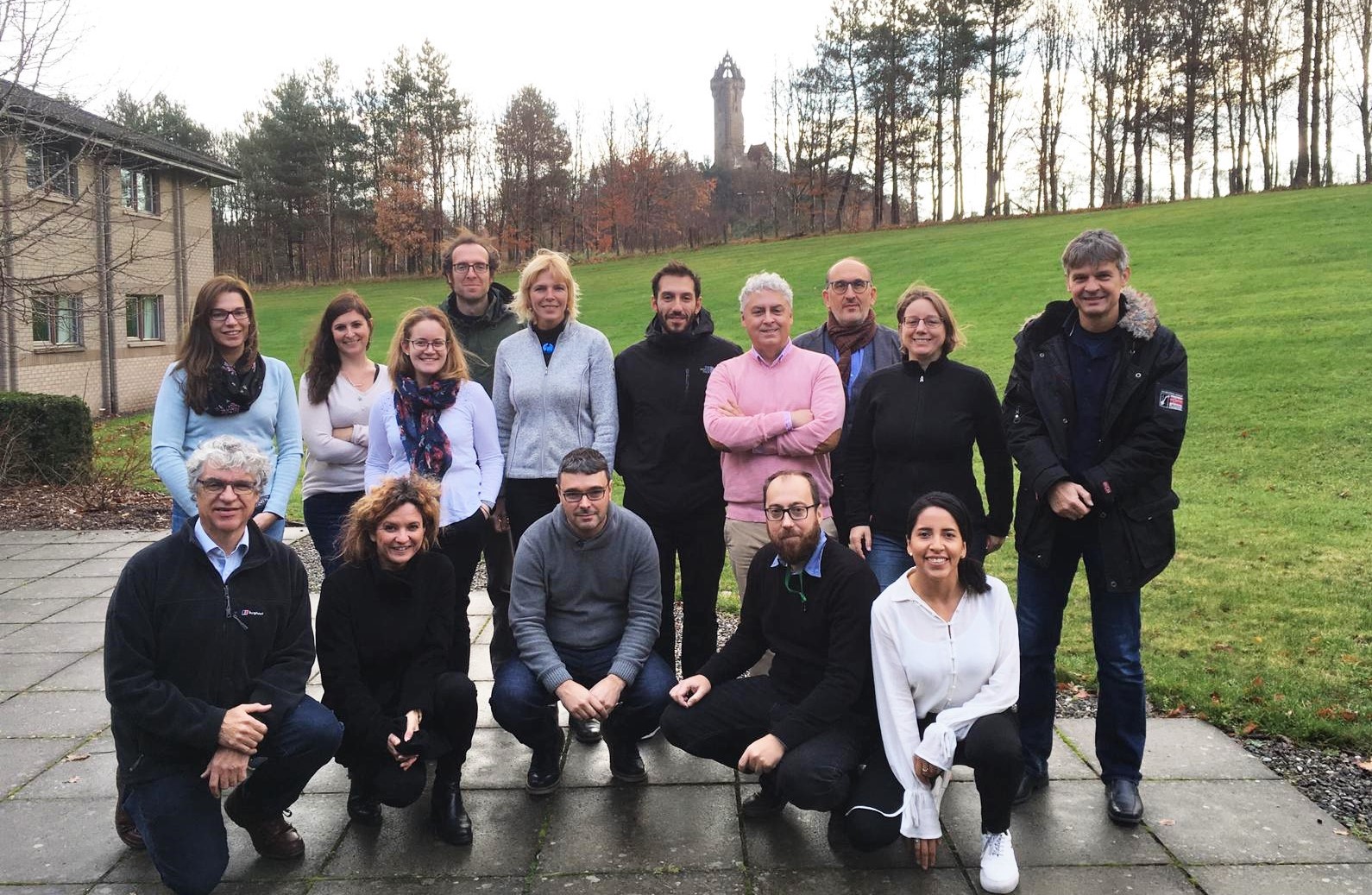
<p>This month CoastObs turned one year old!&nbsp;This coincided with our 3<sup>rd</sup> project meeting and 1st review meeting, so we all got to gather in Scotland where we were hosted by our partner The University of Stirling.</p>
]]></lead>
      <content><![CDATA[<p>&nbsp;</p>

<p>After our meeting in Venice, the consortium didn't have the chance to meet alltogether until this November. The first two days in Stirling we focused on our project meeting and on planning what is coming for the next period. We must say we are very content to where we are at and what's upcoming, so keep updated because this second year will be very exciting!</p>

<p>&nbsp;</p>

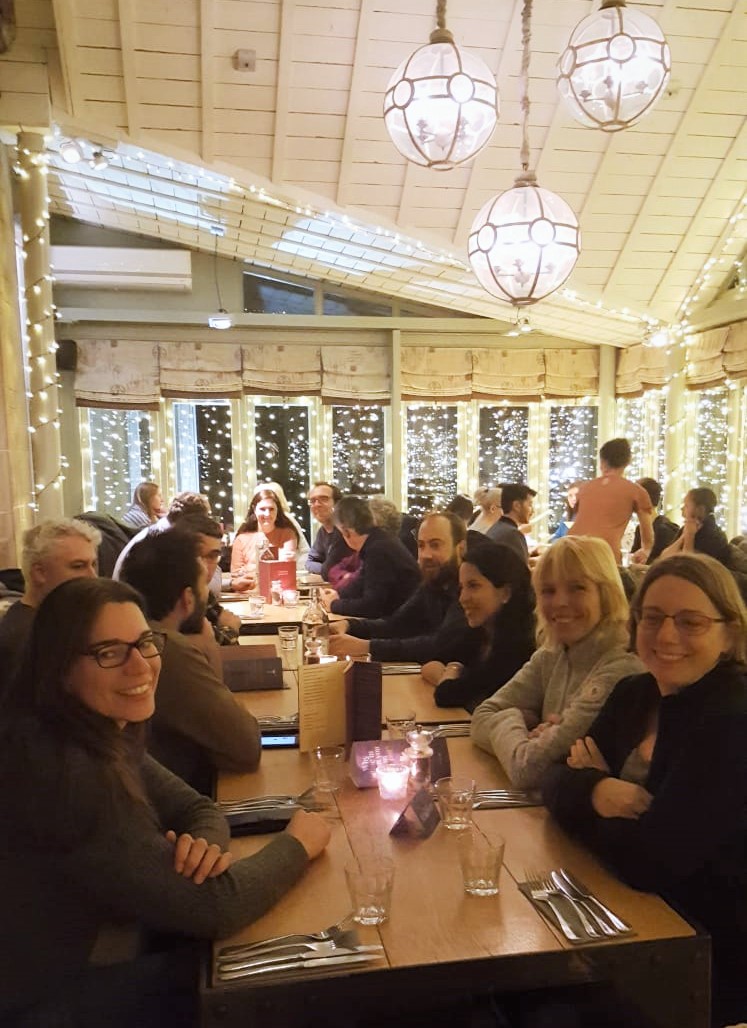
<p>And well, because meetings are also important to bond and catch up on other areas, we had a very tasty dinner altogether. This has &nbsp;been always key on having a great consortium communication and cooperation.&nbsp;</p>

<p>&nbsp;</p>

<p><img alt="" src="https://coastobs.eu/assets/content/Stirling_consortium_vertical.jpeg" style="height:700px; width:509px" /></p>

<p>&nbsp;</p>

<p>On the second night, after the longest day in the agenda, we got to hang out with our Project Officer and Reviewers previous to the review meeting day. We were very happy to get to know them and relax around them.</p>

<p>&nbsp;</p>

<p>The third day in Stirling was fully dedicated to make a recap on what have we done along this first year of CoastObs. We presented to our PO and reviewers the things we planned, what we have achieved and a short overview of what is coming next. It was very good to have their comments and feedback.&nbsp; Did you follow&nbsp;our live tweets in our account?</p>

<p>&nbsp;</p>

<p><img alt="" src="https://coastobs.eu/assets/content/Stirling_reviewmeeting..PNG" style="height:364px; width:501px" /></p>

<p>&nbsp;</p>

<p>Before the year comes to an end we still have some activities to run. For example, the University of Vigo is having at the beginning of December a meeting with users, and on our side we are preparing the 2nd Newsletter edition for you. So wait tight for receiving it in your inbox and if you haven't subscribed, you can do so <a href="https://coastobs.eu/newsletter">here</a>.&nbsp;</p>

<p>&nbsp;</p>

<p>Thanks for reading!</p>

<p>&nbsp;</p>

<p><img alt="" class="img-responsive" src="https://coastobs.eu/assets/content/Stirling_Consortium_outside.jpeg" style="margin-bottom:0.6em; margin-right:1em" /></p>
]]></content>
      <uri>/news/10/coastobs-birthday-project-and-review-meeting</uri>
      <newsContent>
        <newsContent>
          <newsId>10</newsId>
          <alpha3>eng</alpha3>
          <subject>CoastObs' birthday, project and review meeting </subject>
          <slug/>
          <lead><![CDATA[<p><em>@By CoastObs partner Mariana Mata Lara, Geonardo</em></p>

<p>This month CoastObs turned one year old!&nbsp;This coincided with our 3<sup>rd</sup> project meeting and 1st review meeting, so we all got to gather in Scotland where we were hosted by our partner The University of Stirling.</p>
]]></lead>
          <content><![CDATA[<p>&nbsp;</p>

<p>After our meeting in Venice, the consortium didn't have the chance to meet alltogether until this November. The first two days in Stirling we focused on our project meeting and on planning what is coming for the next period. We must say we are very content to where we are at and what's upcoming, so keep updated because this second year will be very exciting!</p>

<p>&nbsp;</p>

<p>And well, because meetings are also important to bond and catch up on other areas, we had a very tasty dinner altogether. This has &nbsp;been always key on having a great consortium communication and cooperation.&nbsp;</p>

<p>&nbsp;</p>

<p><img alt="" src="https://coastobs.eu/assets/content/Stirling_consortium_vertical.jpeg" style="height:700px; width:509px" /></p>

<p>&nbsp;</p>

<p>On the second night, after the longest day in the agenda, we got to hang out with our Project Officer and Reviewers previous to the review meeting day. We were very happy to get to know them and relax around them.</p>

<p>&nbsp;</p>

<p>The third day in Stirling was fully dedicated to make a recap on what have we done along this first year of CoastObs. We presented to our PO and reviewers the things we planned, what we have achieved and a short overview of what is coming next. It was very good to have their comments and feedback.&nbsp; Did you follow&nbsp;our live tweets in our account?</p>

<p>&nbsp;</p>

<p><img alt="" src="https://coastobs.eu/assets/content/Stirling_reviewmeeting..PNG" style="height:364px; width:501px" /></p>

<p>&nbsp;</p>

<p>Before the year comes to an end we still have some activities to run. For example, the University of Vigo is having at the beginning of December a meeting with users, and on our side we are preparing the 2nd Newsletter edition for you. So wait tight for receiving it in your inbox and if you haven't subscribed, you can do so <a href="https://coastobs.eu/newsletter">here</a>.&nbsp;</p>

<p>&nbsp;</p>

<p>Thanks for reading!</p>

<p>&nbsp;</p>

<p><img alt="" class="img-responsive" src="https://coastobs.eu/assets/content/Stirling_Consortium_outside.jpeg" style="margin-bottom:0.6em; margin-right:1em" /></p>
]]></content>
          <updated>
            <date>2018-11-29 12:02:20.000000</date>
            <timezone_type>3</timezone_type>
            <timezone>UTC</timezone>
          </updated>
        </newsContent>
        <newsContent>
          <newsId>10</newsId>
          <alpha3>hun</alpha3>
          <subject/>
          <slug/>
          <lead/>
          <content/>
          <updated>
            <date>2018-11-29 12:02:20.000000</date>
            <timezone_type>3</timezone_type>
            <timezone>UTC</timezone>
          </updated>
        </newsContent>
      </newsContent>
    </news>
    <news>
      <newsId>9</newsId>
      <date>
        <date>2018-09-14 13:38:20.000000</date>
        <timezone_type>3</timezone_type>
        <timezone>UTC</timezone>
      </date>
      <publishingDate>
        <date>2018-09-14 00:00:00.000000</date>
        <timezone_type>3</timezone_type>
        <timezone>UTC</timezone>
      </publishingDate>
      <expirationDate/>
      <thumbnail>news/Fieldwork_Bourgneuf_bay.jpg</thumbnail>
      <status>published</status>
      <uuid>3079c1eb-bf72-4ed8-9a7f-63ac3fdcc894</uuid>
      <updated>
        <date>2019-07-23 14:35:50.000000</date>
        <timezone_type>3</timezone_type>
        <timezone>UTC</timezone>
      </updated>
      <alpha3>eng</alpha3>
      <subject>Seagrass mapping at Bourgneuf bay, France!</subject>
      <slug/>
      <lead><![CDATA[<p><em>@By CoastObs partner Mariana Mata Lara, Geonardo</em></p>

<p>&nbsp;</p>

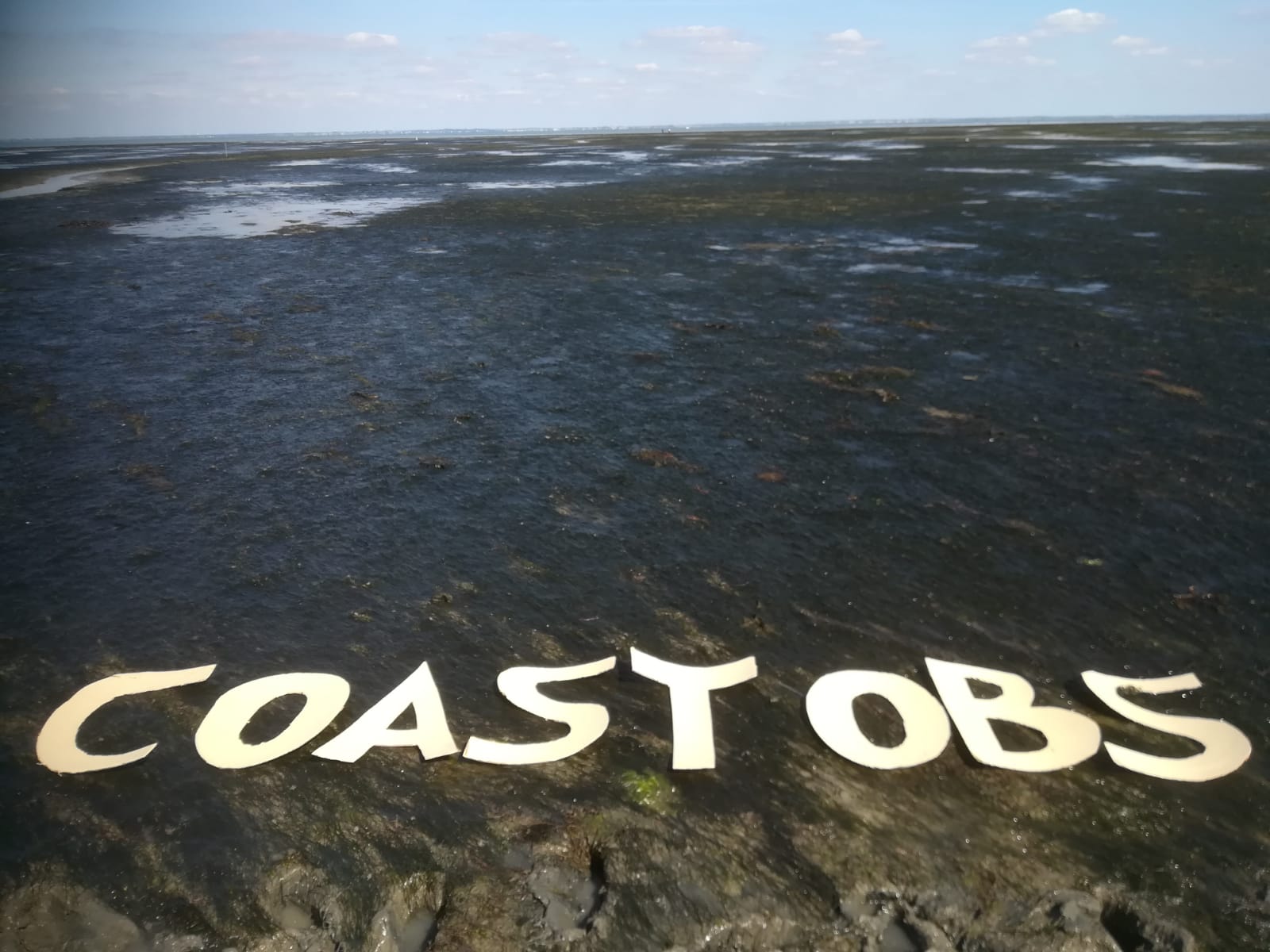
<p>The University of Nantes started a fieldwork campaign for mapping seagrass at&nbsp;Bourgneuf bay and they sent a lovely photo to all CoastObs team!</p>
]]></lead>
      <content><![CDATA[<p>Check what a beautiful&nbsp;playground they had, the intertidal Zostera noltei bed &lt;3 . We wish all the team was there to help!&nbsp;</p>

<p>&nbsp;</p>

<p><img alt="" class="img-responsive" src="http://coastobs.eu/assets/content/Fieldwork_Bourgneuf bay_no people.jpg" style="margin-bottom:0.6em; margin-right:1em" /></p>
]]></content>
      <uri>/news/9/seagrass-mapping-at-bourgneuf-bay-france</uri>
      <newsContent>
        <newsContent>
          <newsId>9</newsId>
          <alpha3>eng</alpha3>
          <subject>Seagrass mapping at Bourgneuf bay, France!</subject>
          <slug/>
          <lead><![CDATA[<p><em>@By CoastObs partner Mariana Mata Lara, Geonardo</em></p>

<p>&nbsp;</p>

<p>The University of Nantes started a fieldwork campaign for mapping seagrass at&nbsp;Bourgneuf bay and they sent a lovely photo to all CoastObs team!</p>
]]></lead>
          <content><![CDATA[<p>Check what a beautiful&nbsp;playground they had, the intertidal Zostera noltei bed &lt;3 . We wish all the team was there to help!&nbsp;</p>

<p>&nbsp;</p>

<p><img alt="" class="img-responsive" src="http://coastobs.eu/assets/content/Fieldwork_Bourgneuf bay_no people.jpg" style="margin-bottom:0.6em; margin-right:1em" /></p>
]]></content>
          <updated>
            <date>2018-09-19 13:43:33.000000</date>
            <timezone_type>3</timezone_type>
            <timezone>UTC</timezone>
          </updated>
        </newsContent>
        <newsContent>
          <newsId>9</newsId>
          <alpha3>hun</alpha3>
          <subject/>
          <slug/>
          <lead/>
          <content/>
          <updated>
            <date>2018-09-19 13:43:33.000000</date>
            <timezone_type>3</timezone_type>
            <timezone>UTC</timezone>
          </updated>
        </newsContent>
      </newsContent>
    </news>
    <news>
      <newsId>7</newsId>
      <date>
        <date>2018-07-17 10:17:07.000000</date>
        <timezone_type>3</timezone_type>
        <timezone>UTC</timezone>
      </date>
      <publishingDate>
        <date>2018-07-17 00:00:00.000000</date>
        <timezone_type>3</timezone_type>
        <timezone>UTC</timezone>
      </publishingDate>
      <expirationDate/>
      <thumbnail>news/Fieldwork_Vigo_1.800.jpg</thumbnail>
      <status>published</status>
      <uuid>15740b4d-0165-4a84-abd4-d95b79540c6b</uuid>
      <updated>
        <date>2019-07-23 14:32:30.000000</date>
        <timezone_type>3</timezone_type>
        <timezone>UTC</timezone>
      </updated>
      <alpha3>eng</alpha3>
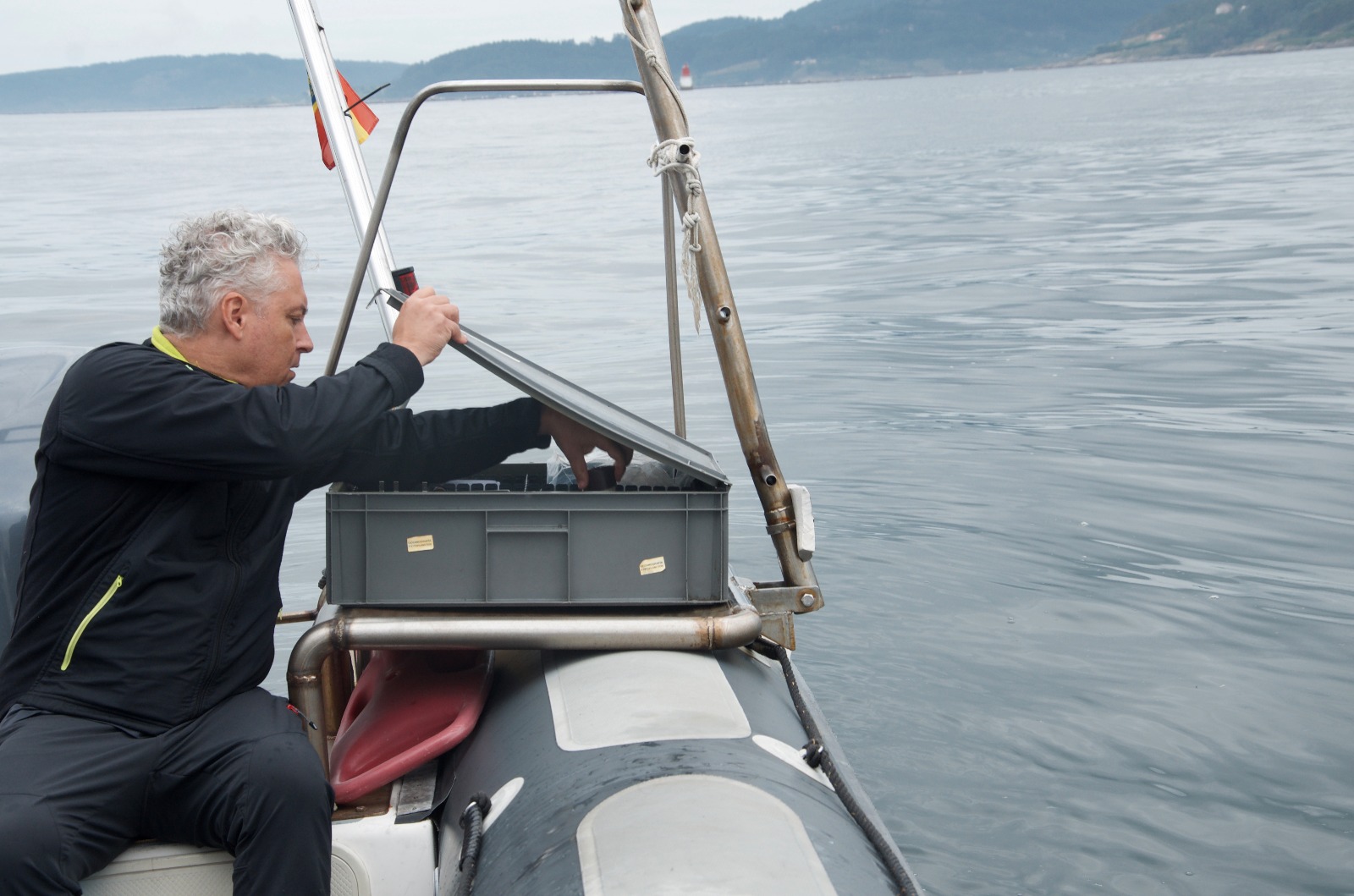
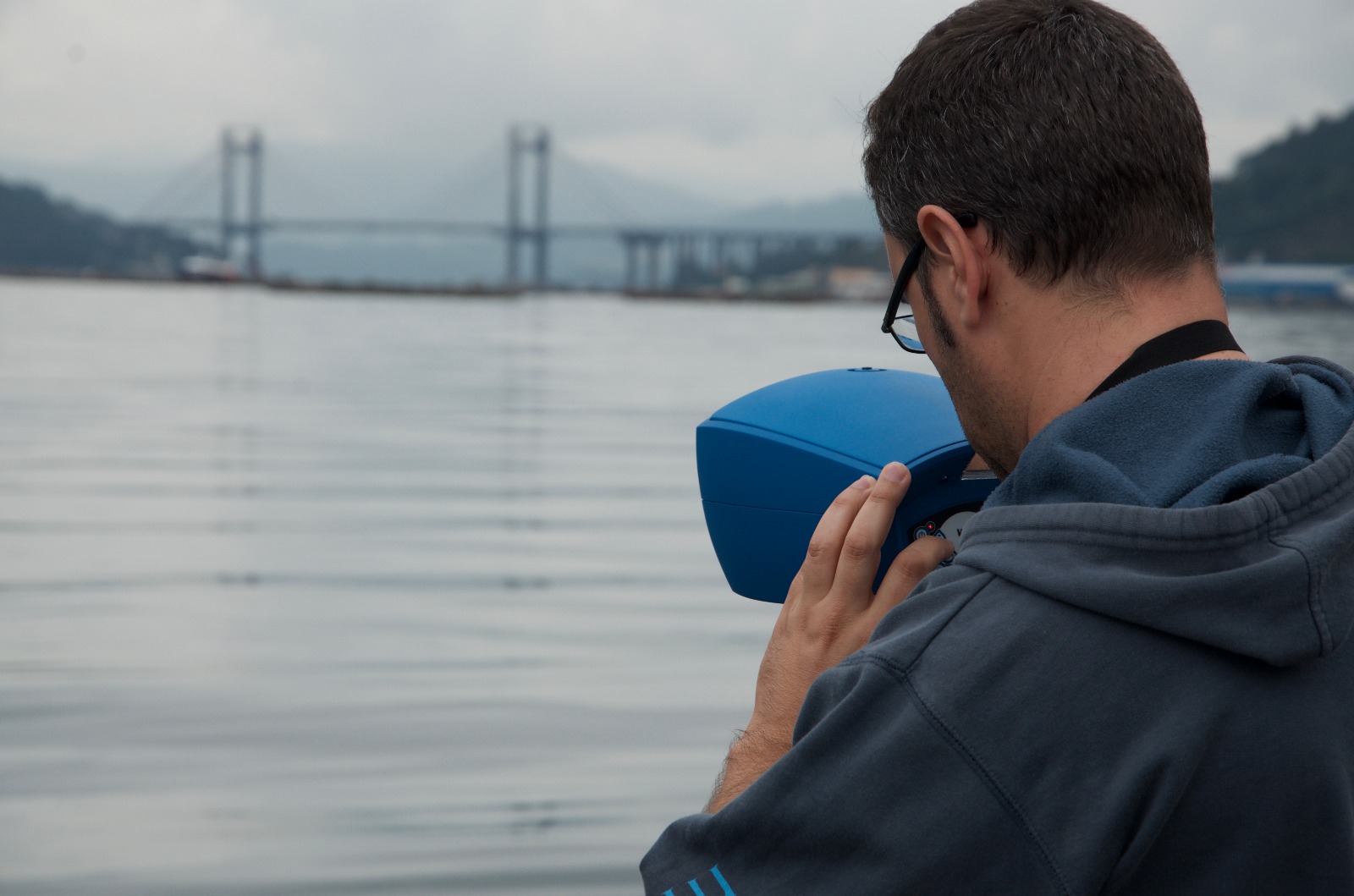
      <subject>Sampling in the Ria de Vigo, Spain for the validation of Copernicus EU Sentinel-2 and -3 data </subject>
      <slug/>
      <lead><![CDATA[<p><em>@By CoastObs partner Mariana Mata Lara, Geonardo</em></p>

<p>&nbsp;</p>

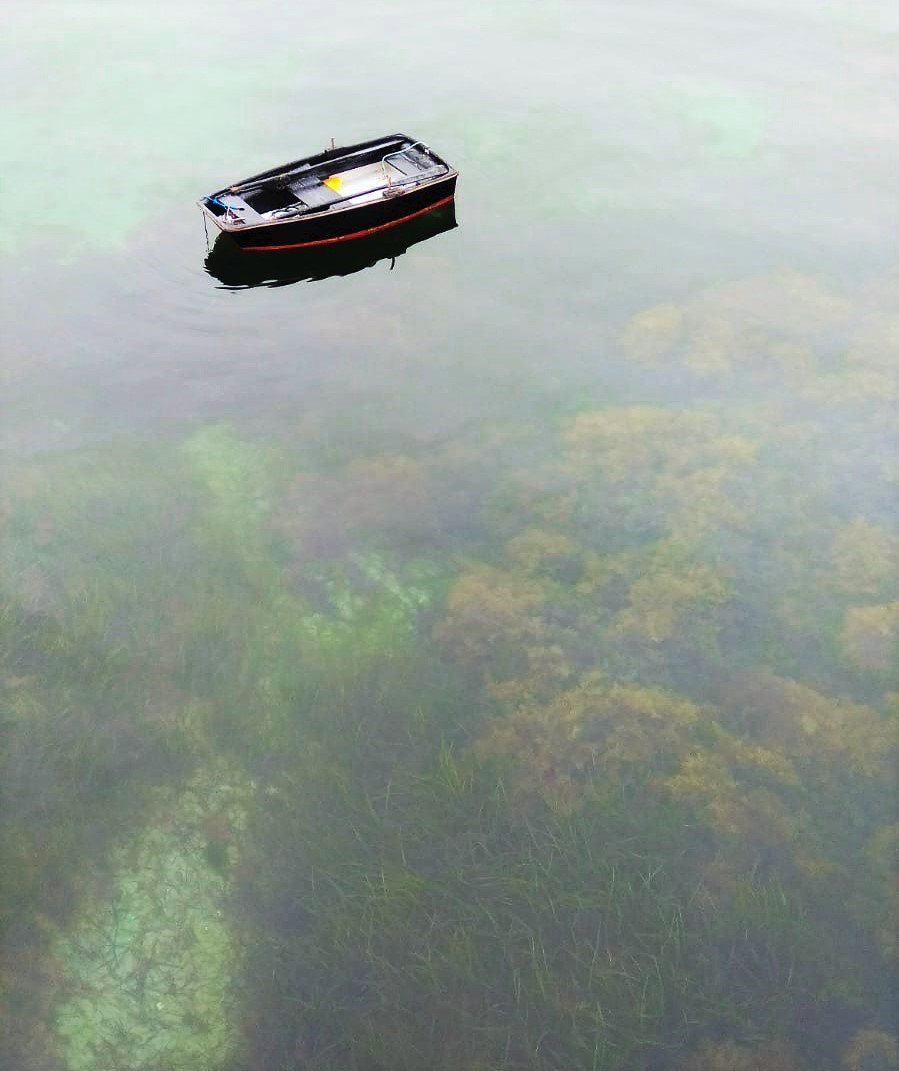
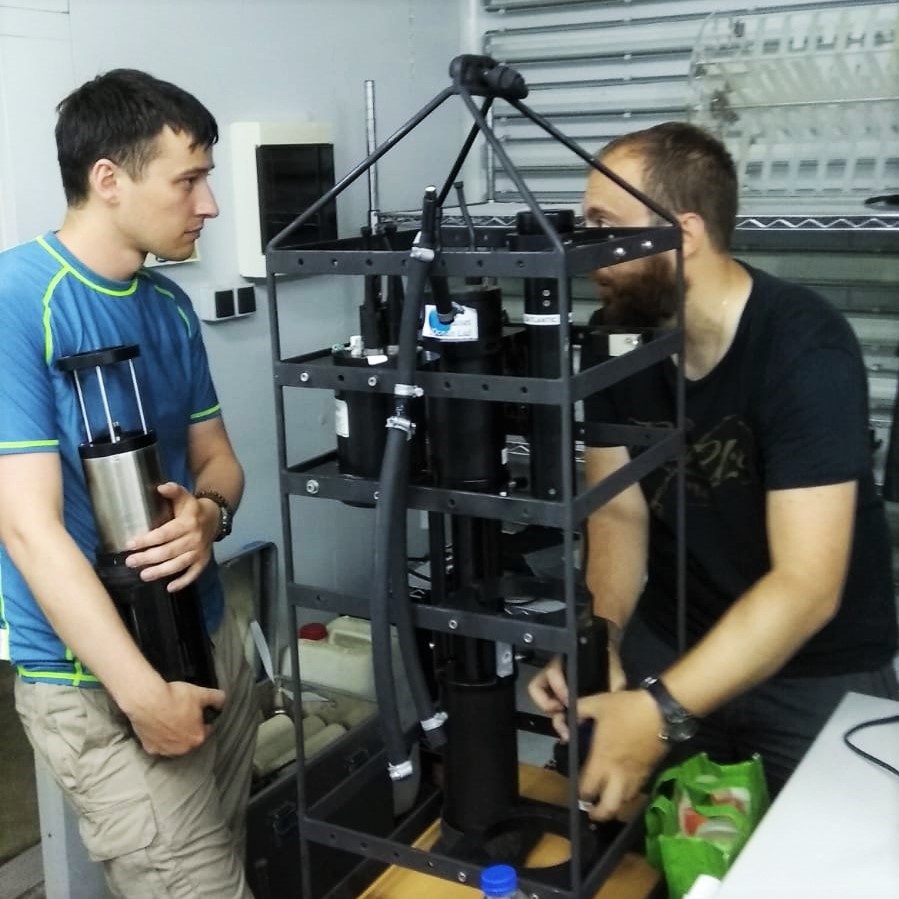
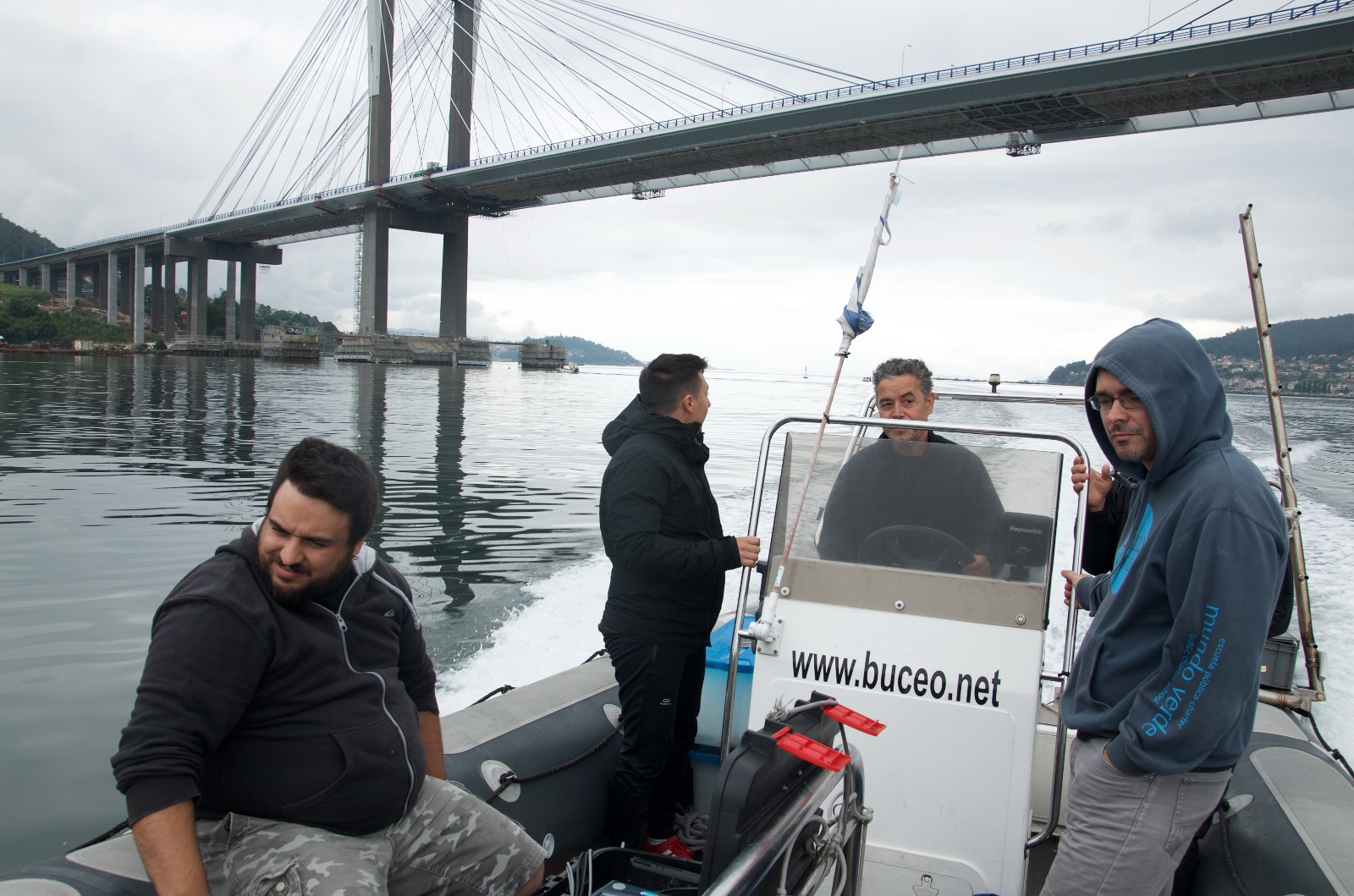
<p>The&nbsp;<a href="https://twitter.com/lochs_stiruni">Laboratory for Optical Biogeochemistry and Remote Sensing</a> from Stirling University and the <a href="http://www.tgis.uvigo.es/" target="_blank">Remote Sensing and GIS Lab of Applied Physic Department </a>of University of Vigo, went on a fieldwork campaign to characterize the biogeooptical parameters of the complex waters of the Ria de Vigo as part of the&nbsp;the validation of <a href="http://www.copernicus.eu/">Copernicus EU</a> Sentinel-2 and -3 data.&nbsp;</p>

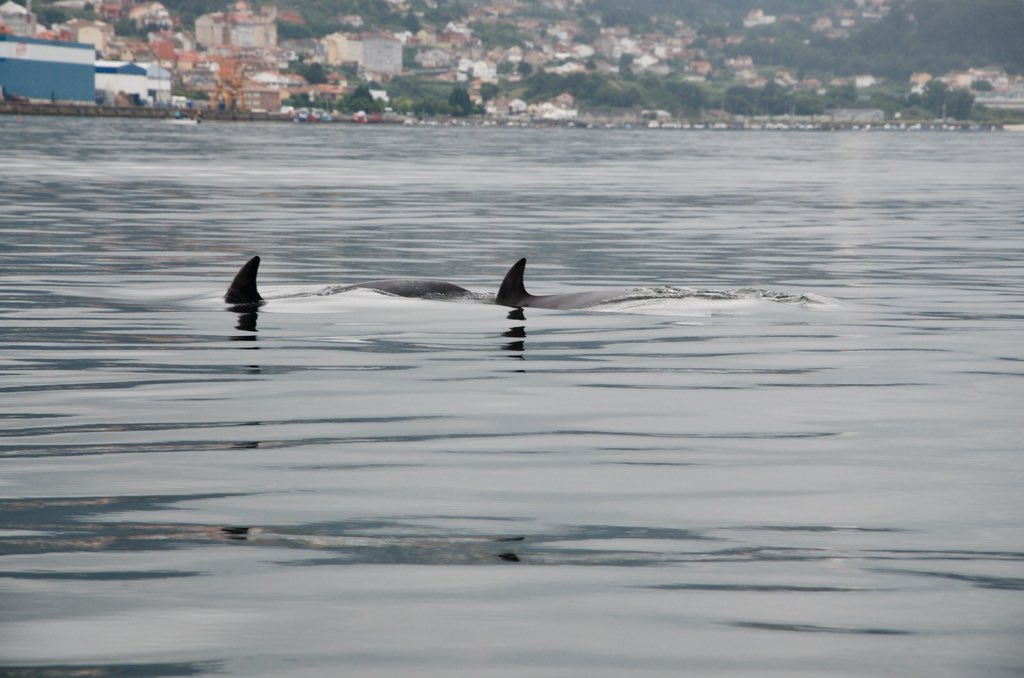
<p>Check out some of the fieldwork campaign photos because t<strong>hey didn't only manage to spot a harmful algae bloom but also some dolphins!</strong></p>
]]></lead>
      <content><![CDATA[<p>&nbsp;</p>

<p>The&nbsp;<a href="https://twitter.com/lochs_stiruni">Laboratory for Optical Biogeochemistry and Remote Sensing</a> from Stirling University and the <a href="http://www.tgis.uvigo.es/" target="_blank">Remote Sensing and GIS Lab of Applied Physic Department </a>of University of Vigo, went on a fieldwork campaign to characterize the biogeooptical parameters of the complex waters of the Ria de Vigo as part of the&nbsp;the validation of <a href="http://www.copernicus.eu/">Copernicus EU</a> Sentinel-2 and -3 data.</p>

<p>&nbsp;</p>

<p>Check out some of the fieldwork campaign photos because they didn't only manage to spot a harmful algae bloom but also some dolphins!</p>

<p>&nbsp;</p>

<p><img alt="" class="img-responsive" src="http://coastobs.eu/assets/content/Fieldwork_Vigo_2.jpg" style="margin-bottom:0.6em; margin-right:1em" /></p>

<p><img alt="" class="img-responsive" src="http://coastobs.eu/assets/content/Fieldwork_Vigo_sq_vagelis.jpeg" style="margin-bottom:0.6em; margin-right:1em" /><img alt="" class="img-responsive" src="http://coastobs.eu/assets/content/Fieldwork_Vigo_boat.jpeg" style="margin-bottom:0.6em; margin-right:1em" /><img alt="" class="img-responsive" src="http://coastobs.eu/assets/content/Fieldwork_Vigo_Jesus.jpeg" style="margin-bottom:0.6em; margin-right:1em" /><img alt="" class="img-responsive" src="http://coastobs.eu/assets/content/Fieldwork_Vigo_WISP.jpeg" style="margin-bottom:0.6em; margin-right:1em" /></p>

<p><img alt="" class="img-responsive" src="http://coastobs.eu/assets/content/Fieldwork_Vigo_5.jpg" style="margin-bottom:0.6em; margin-right:1em" /></p>

<p>&nbsp;</p>
]]></content>
      <uri>/news/7/sampling-in-the-ria-de-vigo-spain-for-the-validation-of-copernicus-eu-sentinel-2-and-3-data</uri>
      <newsContent>
        <newsContent>
          <newsId>7</newsId>
          <alpha3>eng</alpha3>
          <subject>Sampling in the Ria de Vigo, Spain for the validation of Copernicus EU Sentinel-2 and -3 data </subject>
          <slug/>
          <lead><![CDATA[<p><em>@By CoastObs partner Mariana Mata Lara, Geonardo</em></p>

<p>&nbsp;</p>

<p>The&nbsp;<a href="https://twitter.com/lochs_stiruni">Laboratory for Optical Biogeochemistry and Remote Sensing</a> from Stirling University and the <a href="http://www.tgis.uvigo.es/" target="_blank">Remote Sensing and GIS Lab of Applied Physic Department </a>of University of Vigo, went on a fieldwork campaign to characterize the biogeooptical parameters of the complex waters of the Ria de Vigo as part of the&nbsp;the validation of <a href="http://www.copernicus.eu/">Copernicus EU</a> Sentinel-2 and -3 data.&nbsp;</p>

<p>Check out some of the fieldwork campaign photos because t<strong>hey didn't only manage to spot a harmful algae bloom but also some dolphins!</strong></p>
]]></lead>
          <content><![CDATA[<p>&nbsp;</p>

<p>The&nbsp;<a href="https://twitter.com/lochs_stiruni">Laboratory for Optical Biogeochemistry and Remote Sensing</a> from Stirling University and the <a href="http://www.tgis.uvigo.es/" target="_blank">Remote Sensing and GIS Lab of Applied Physic Department </a>of University of Vigo, went on a fieldwork campaign to characterize the biogeooptical parameters of the complex waters of the Ria de Vigo as part of the&nbsp;the validation of <a href="http://www.copernicus.eu/">Copernicus EU</a> Sentinel-2 and -3 data.</p>

<p>&nbsp;</p>

<p>Check out some of the fieldwork campaign photos because they didn't only manage to spot a harmful algae bloom but also some dolphins!</p>

<p>&nbsp;</p>

<p><img alt="" class="img-responsive" src="http://coastobs.eu/assets/content/Fieldwork_Vigo_2.jpg" style="margin-bottom:0.6em; margin-right:1em" /></p>

<p><img alt="" class="img-responsive" src="http://coastobs.eu/assets/content/Fieldwork_Vigo_sq_vagelis.jpeg" style="margin-bottom:0.6em; margin-right:1em" /><img alt="" class="img-responsive" src="http://coastobs.eu/assets/content/Fieldwork_Vigo_boat.jpeg" style="margin-bottom:0.6em; margin-right:1em" /><img alt="" class="img-responsive" src="http://coastobs.eu/assets/content/Fieldwork_Vigo_Jesus.jpeg" style="margin-bottom:0.6em; margin-right:1em" /><img alt="" class="img-responsive" src="http://coastobs.eu/assets/content/Fieldwork_Vigo_WISP.jpeg" style="margin-bottom:0.6em; margin-right:1em" /></p>

<p><img alt="" class="img-responsive" src="http://coastobs.eu/assets/content/Fieldwork_Vigo_5.jpg" style="margin-bottom:0.6em; margin-right:1em" /></p>

<p>&nbsp;</p>
]]></content>
          <updated>
            <date>2018-09-19 10:35:54.000000</date>
            <timezone_type>3</timezone_type>
            <timezone>UTC</timezone>
          </updated>
        </newsContent>
        <newsContent>
          <newsId>7</newsId>
          <alpha3>hun</alpha3>
          <subject/>
          <slug/>
          <lead/>
          <content/>
          <updated>
            <date>2018-09-19 10:35:54.000000</date>
            <timezone_type>3</timezone_type>
            <timezone>UTC</timezone>
          </updated>
        </newsContent>
      </newsContent>
    </news>
    <news>
      <newsId>8</newsId>
      <date>
        <date>2018-06-28 10:17:07.000000</date>
        <timezone_type>3</timezone_type>
        <timezone>UTC</timezone>
      </date>
      <publishingDate>
        <date>2018-06-28 00:00:00.000000</date>
        <timezone_type>3</timezone_type>
        <timezone>UTC</timezone>
      </publishingDate>
      <expirationDate/>
      <thumbnail>news/Fieldwork_Venice_date.800.jpg</thumbnail>
      <status>published</status>
      <uuid>2ff44b20-39eb-42db-a6bd-0ed29c2a5cd6</uuid>
      <updated>
        <date>2019-07-23 14:32:30.000000</date>
        <timezone_type>3</timezone_type>
        <timezone>UTC</timezone>
      </updated>
      <alpha3>eng</alpha3>
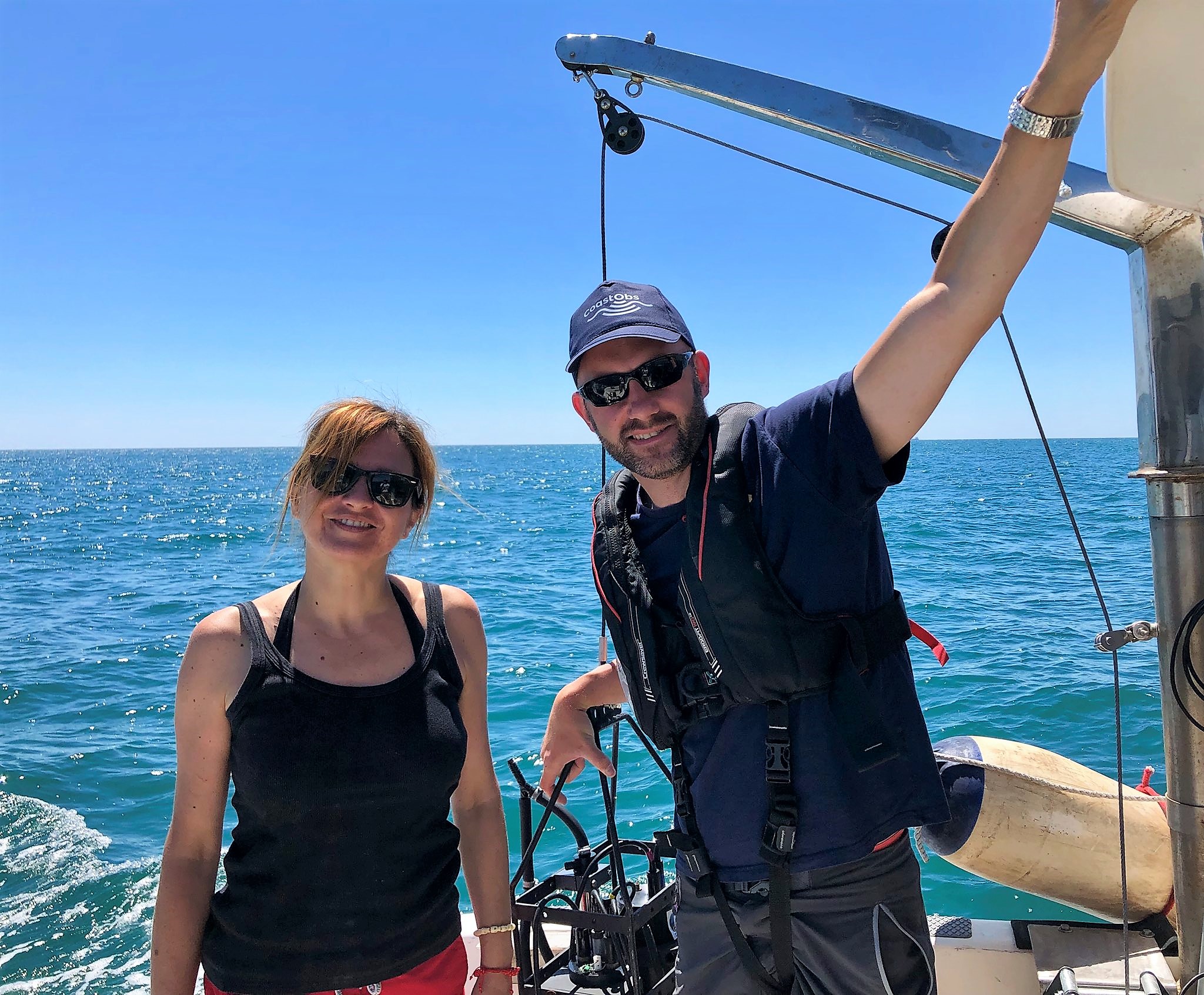
      <subject> Fieldwork campaign in Venice for validating Sentinel-3 EO data!</subject>
      <slug/>
      <lead><![CDATA[<p><em>By @CoastObs partner Mariana Mata Lara, Geonardo&nbsp;</em></p>

<p>&nbsp;</p>

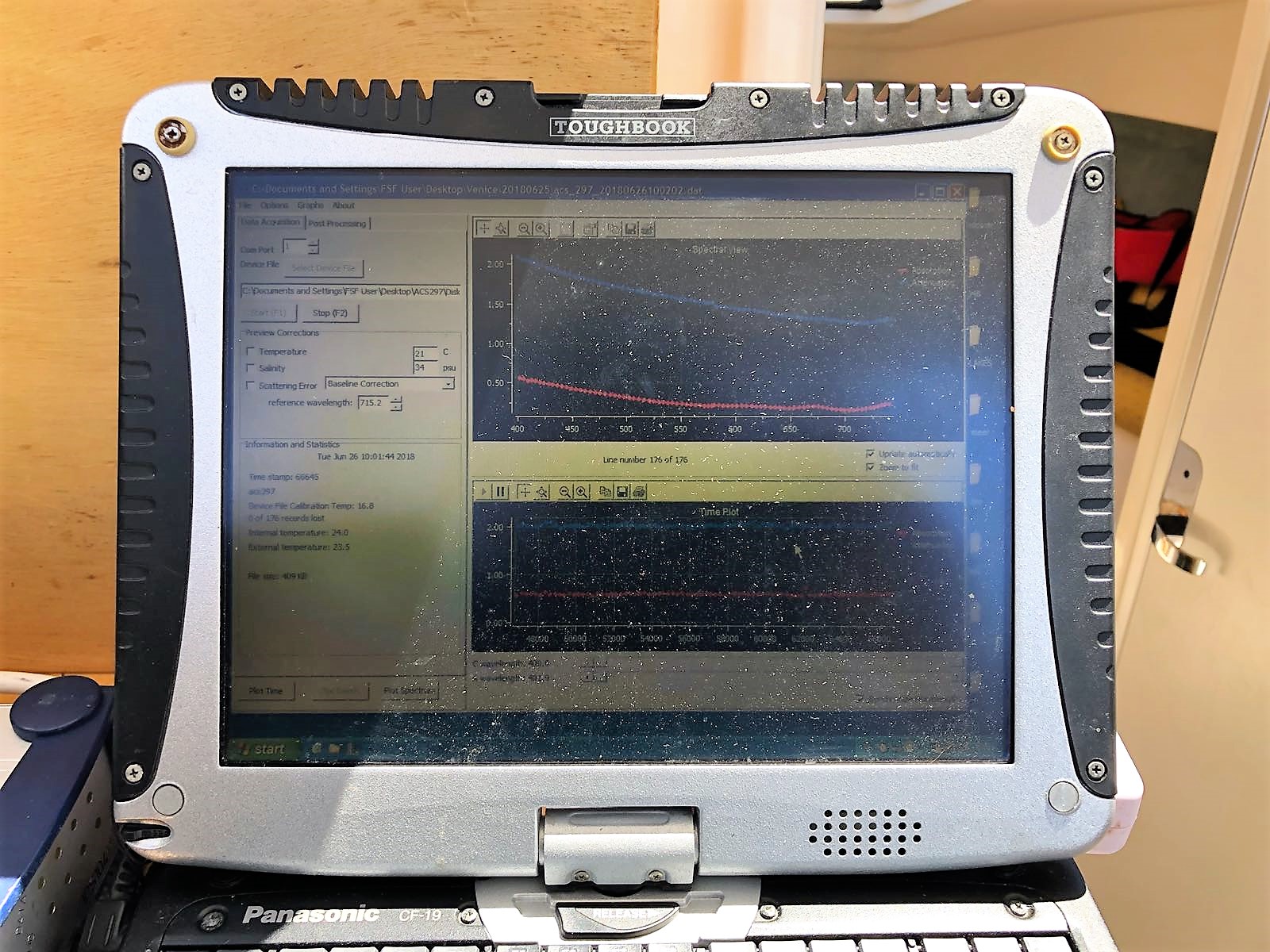
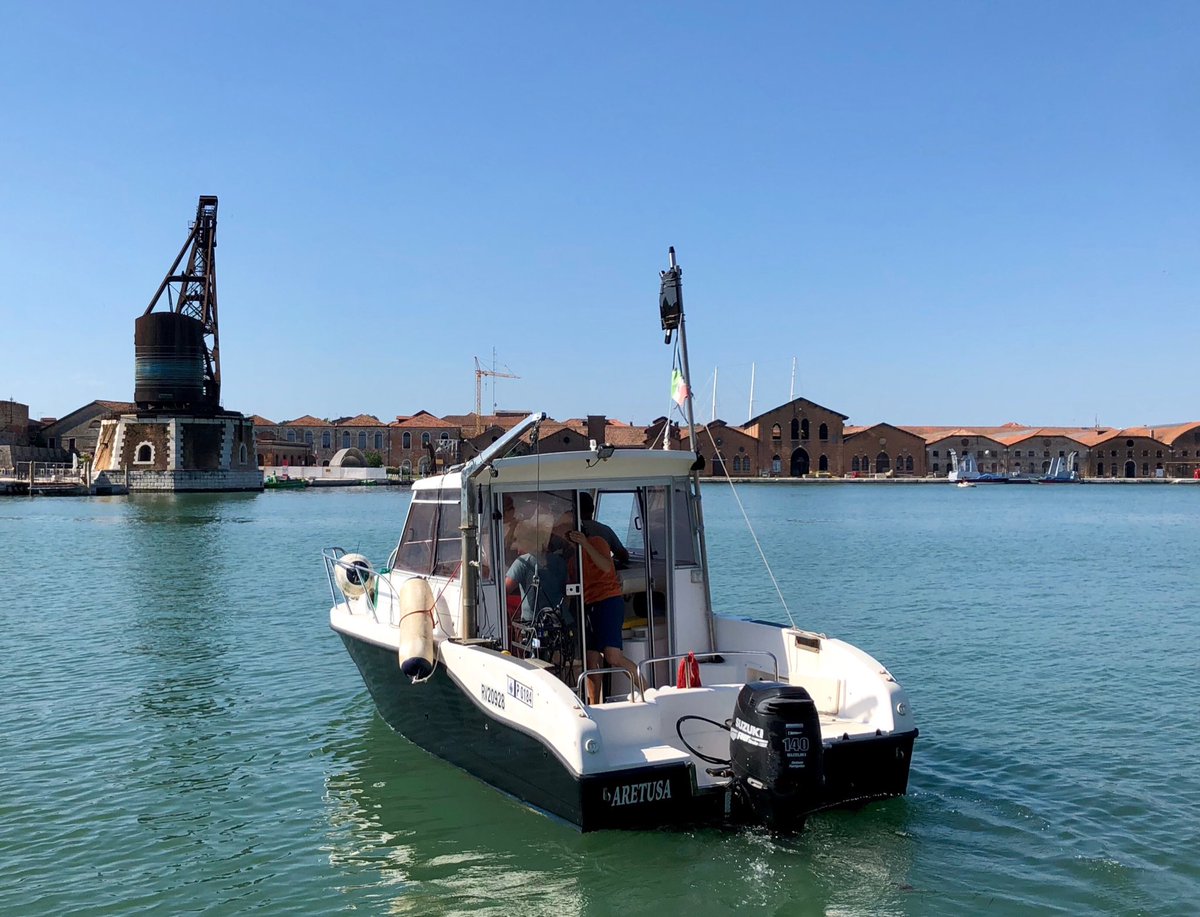
<p>The National Research Council - Department of Earth System Science and Environmental Technologies (<a href="https://twitter.com/CNRDTA">CNR-DTA</a>) and <a href="https://twitter.com/lochs_stiruni">LOCHS Lab</a> from Stirling University went on a fieldwork campaign for taking&nbsp;water samples of the Adriatic Coast and validate <a href="http://www.esa.int/Our_Activities/Observing_the_Earth/Copernicus/Sentinel-3">Sentinel 3 </a>data.&nbsp;</p>

<p>Here some sneak peeks of sunny Venice and the&nbsp;water quality monitoring.&nbsp;</p>
]]></lead>
      <content><![CDATA[<p>The National Research Council - Department of Earth System Science and Environmental Technologies (<a href="https://twitter.com/CNRDTA">CNR-DTA</a>) and <a href="https://twitter.com/lochs_stiruni">LOCHS Lab</a> from Stirling University went on a fieldwork campaign for taking&nbsp;water samples of the Adriatic Coast and validate<a href="http://www.esa.int/Our_Activities/Observing_the_Earth/Copernicus/Sentinel-3"> Sentinel 3</a> data.&nbsp;</p>

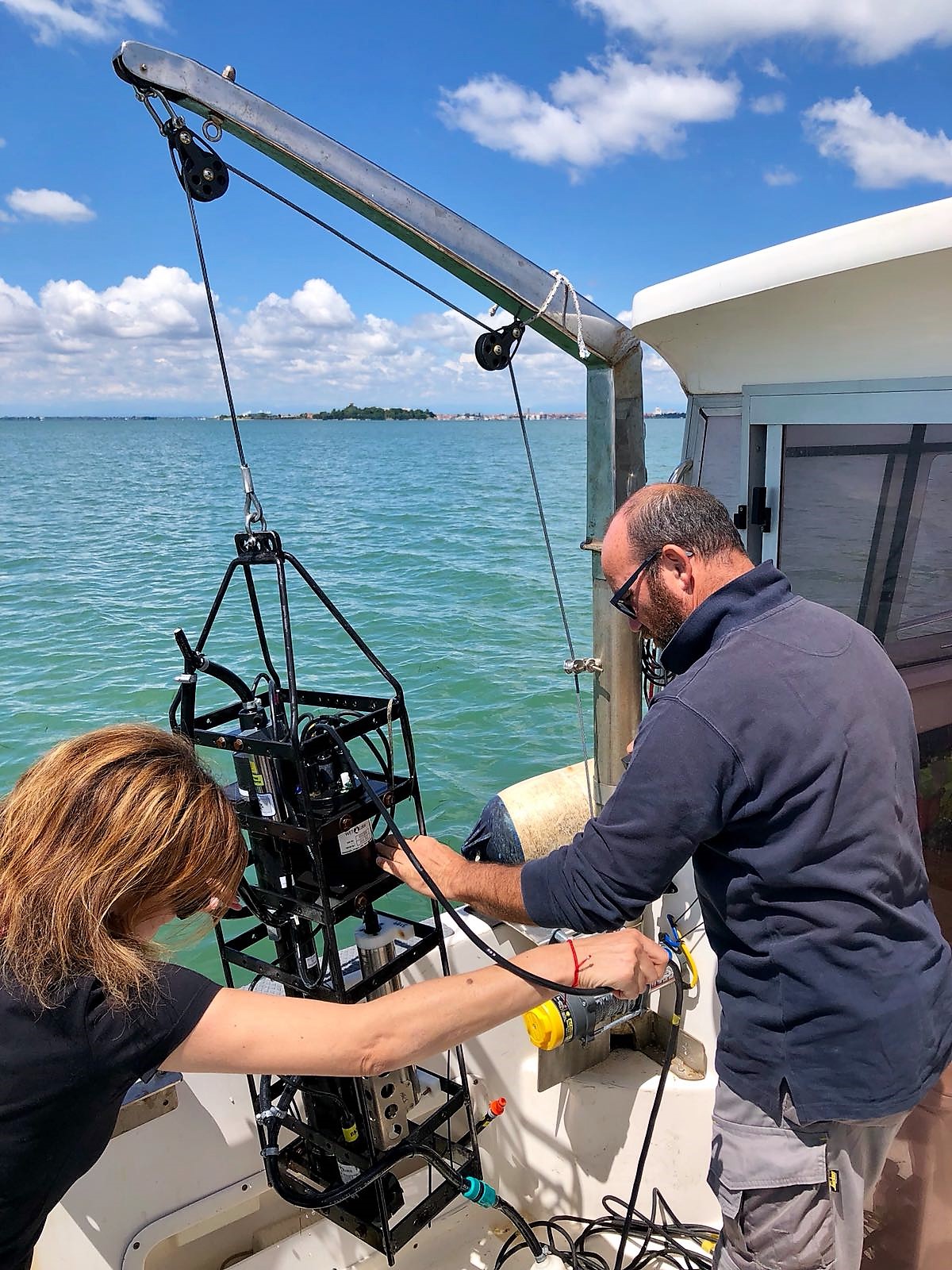
<p>Here some sneak peeks of sunny Venice and the&nbsp;water quality monitoring.&nbsp;</p>

<p><img alt="" class="img-responsive" src="http://coastobs.eu/assets/content/Fieldwork_Venice_coastobs cap.jpg" style="margin-bottom:0.6em; margin-right:1em" /><img alt="" class="img-responsive" src="http://coastobs.eu/assets/content/Fieldwork_Venice_Adriatic.jpeg" style="margin-bottom:0.6em; margin-right:1em" /><img alt="" class="img-responsive" src="http://coastobs.eu/assets/content/Fieldwork_Venice_.jpeg" style="margin-bottom:0.6em; margin-right:1em" /><img alt="" class="img-responsive" src="http://coastobs.eu/assets/content/Fieldwork_Venice_Catalin.jpg" style="margin-bottom:0.6em; margin-right:1em" /><img alt="" class="img-responsive" src="http://coastobs.eu/assets/content/Fieldwork_Venice_Vittorio_WISP.jpg" style="margin-bottom:0.6em; margin-right:1em" /><img alt="" class="img-responsive" src="http://coastobs.eu/assets/content/Fieldwork_Venice_displayed data.jpeg" style="margin-bottom:0.6em; margin-right:1em" /></p>

<p><img alt="" class="img-responsive" src="http://coastobs.eu/assets/content/Fieldwork_Venice_boat.jpg" style="margin-bottom:0.6em; margin-right:1em" /></p>
]]></content>
      <uri>/news/8/fieldwork-campaign-in-venice-for-validating-sentinel-3-eo-data</uri>
      <newsContent>
        <newsContent>
          <newsId>8</newsId>
          <alpha3>eng</alpha3>
          <subject> Fieldwork campaign in Venice for validating Sentinel-3 EO data!</subject>
          <slug/>
          <lead><![CDATA[<p><em>By @CoastObs partner Mariana Mata Lara, Geonardo&nbsp;</em></p>

<p>&nbsp;</p>

<p>The National Research Council - Department of Earth System Science and Environmental Technologies (<a href="https://twitter.com/CNRDTA">CNR-DTA</a>) and <a href="https://twitter.com/lochs_stiruni">LOCHS Lab</a> from Stirling University went on a fieldwork campaign for taking&nbsp;water samples of the Adriatic Coast and validate <a href="http://www.esa.int/Our_Activities/Observing_the_Earth/Copernicus/Sentinel-3">Sentinel 3 </a>data.&nbsp;</p>

<p>Here some sneak peeks of sunny Venice and the&nbsp;water quality monitoring.&nbsp;</p>
]]></lead>
          <content><![CDATA[<p>The National Research Council - Department of Earth System Science and Environmental Technologies (<a href="https://twitter.com/CNRDTA">CNR-DTA</a>) and <a href="https://twitter.com/lochs_stiruni">LOCHS Lab</a> from Stirling University went on a fieldwork campaign for taking&nbsp;water samples of the Adriatic Coast and validate<a href="http://www.esa.int/Our_Activities/Observing_the_Earth/Copernicus/Sentinel-3"> Sentinel 3</a> data.&nbsp;</p>

<p>Here some sneak peeks of sunny Venice and the&nbsp;water quality monitoring.&nbsp;</p>

<p><img alt="" class="img-responsive" src="http://coastobs.eu/assets/content/Fieldwork_Venice_coastobs cap.jpg" style="margin-bottom:0.6em; margin-right:1em" /><img alt="" class="img-responsive" src="http://coastobs.eu/assets/content/Fieldwork_Venice_Adriatic.jpeg" style="margin-bottom:0.6em; margin-right:1em" /><img alt="" class="img-responsive" src="http://coastobs.eu/assets/content/Fieldwork_Venice_.jpeg" style="margin-bottom:0.6em; margin-right:1em" /><img alt="" class="img-responsive" src="http://coastobs.eu/assets/content/Fieldwork_Venice_Catalin.jpg" style="margin-bottom:0.6em; margin-right:1em" /><img alt="" class="img-responsive" src="http://coastobs.eu/assets/content/Fieldwork_Venice_Vittorio_WISP.jpg" style="margin-bottom:0.6em; margin-right:1em" /><img alt="" class="img-responsive" src="http://coastobs.eu/assets/content/Fieldwork_Venice_displayed data.jpeg" style="margin-bottom:0.6em; margin-right:1em" /></p>

<p><img alt="" class="img-responsive" src="http://coastobs.eu/assets/content/Fieldwork_Venice_boat.jpg" style="margin-bottom:0.6em; margin-right:1em" /></p>
]]></content>
          <updated>
            <date>2018-09-19 11:26:14.000000</date>
            <timezone_type>3</timezone_type>
            <timezone>UTC</timezone>
          </updated>
        </newsContent>
        <newsContent>
          <newsId>8</newsId>
          <alpha3>hun</alpha3>
          <subject/>
          <slug/>
          <lead/>
          <content/>
          <updated>
            <date>2018-09-19 11:26:14.000000</date>
            <timezone_type>3</timezone_type>
            <timezone>UTC</timezone>
          </updated>
        </newsContent>
      </newsContent>
    </news>
    <news>
      <newsId>6</newsId>
      <date>
        <date>2018-06-04 15:12:44.000000</date>
        <timezone_type>3</timezone_type>
        <timezone>UTC</timezone>
      </date>
      <publishingDate>
        <date>2018-06-04 00:00:00.000000</date>
        <timezone_type>3</timezone_type>
        <timezone>UTC</timezone>
      </publishingDate>
      <expirationDate/>
      <thumbnail>news/tiago_eurocean_EMD2018_horizontal.jpg</thumbnail>
      <status>published</status>
      <uuid>9178b125-9386-486b-9a07-d74595bb79aa</uuid>
      <updated>
        <date>2019-07-23 14:37:11.000000</date>
        <timezone_type>3</timezone_type>
        <timezone>UTC</timezone>
      </updated>
      <alpha3>eng</alpha3>
      <subject>Recap of CoastObs' participation in the European Maritime Day 2018</subject>
      <slug/>
      <lead><![CDATA[<p><em>@By CoastObs partner Mariana Mata Lara, Geonardo</em></p>

<p>&nbsp;</p>

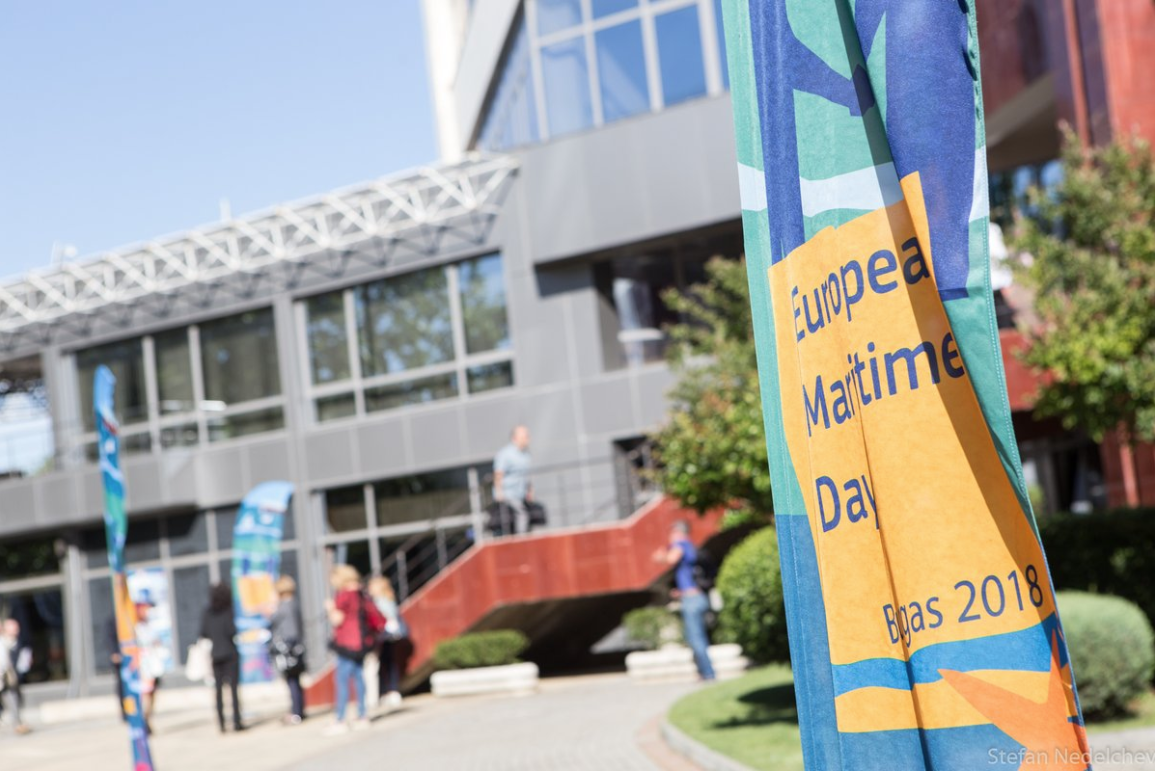
<p>On its 11<sup>th</sup> edition, the <a href="https://ec.europa.eu/maritimeaffairs/maritimeday/en/burgas-2018">European Maritime Day</a> was held in Burgas, Bulgaria last May 31<sup>st</sup> and June 1<sup>st</sup> receiving about 900 participants. The most significant event related to maritime policy of the EU Member States, hosted also 18 stakeholder workshops and 27 exhibitors including <a href="coastobs.eu">CoastObs project</a>!</p>
]]></lead>
      <content><![CDATA[<p class="text-right"><cite>Photo:&nbsp;Tiago Garcia</cite></p>

<p>&nbsp;</p>
<img alt="" class="img-responsive" src="http://coastobs.eu/assets/content/emd_flag.PNG" />
<p class="text-right"><cite>Photo:&nbsp;Stefan Nedelchev</cite></p>

<p>&nbsp;</p>

<p>The <a href="https://ec.europa.eu/maritimeaffairs/maritimeday/en/programme-schedule">programme</a> included discussions around Marine Spatial Planning, Sustainable Fisheries &amp; Aquaculture, Regional Maritime Cooperation, Digitalisation &amp; Data for Maritime Applications, Common Information Sharing Environment, Sustainable Tourism &amp; Blue Bio-economy, Research &amp; Blue Growth for mentioning a few.</p>

<p>&nbsp;</p>

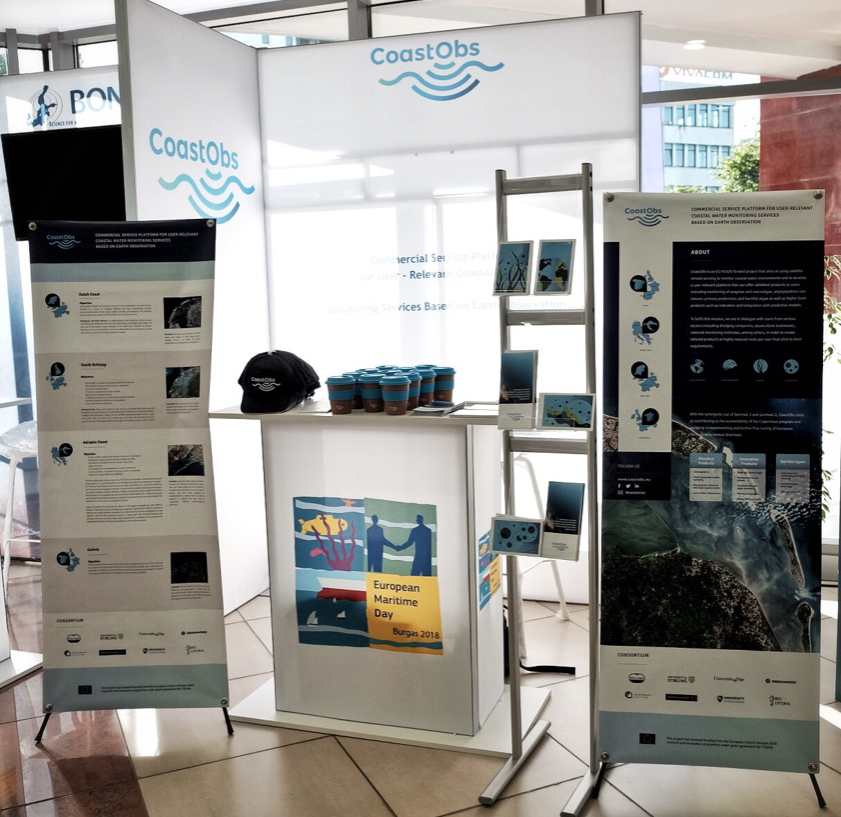
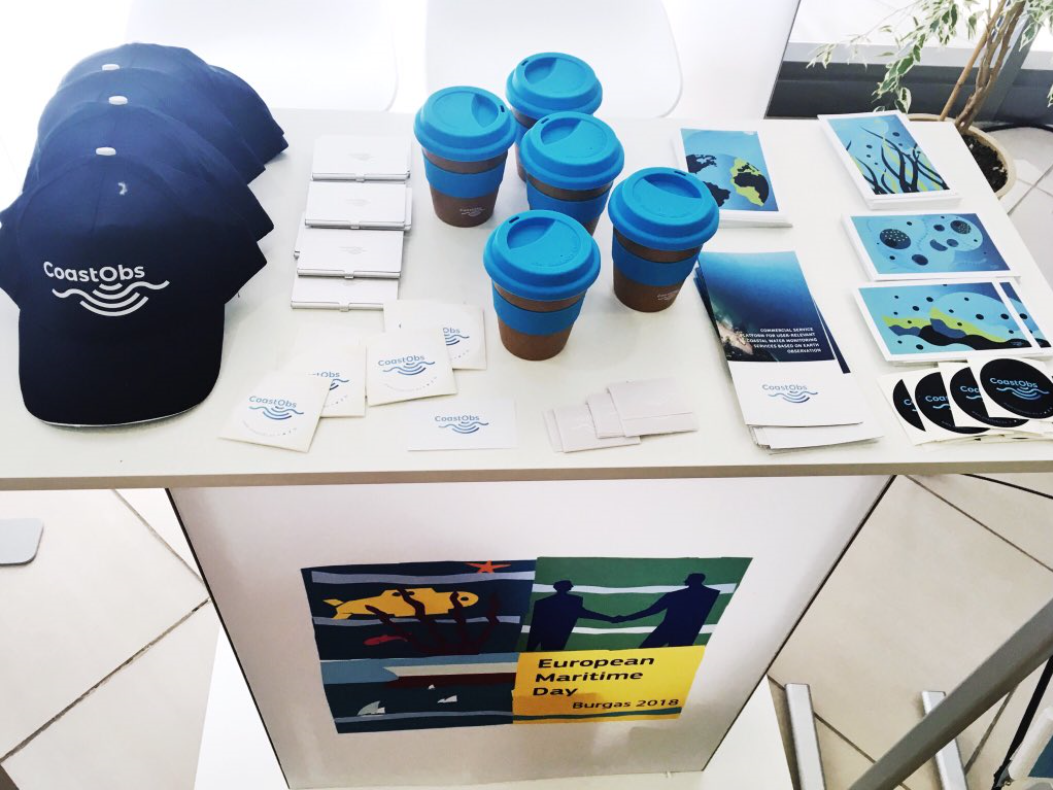
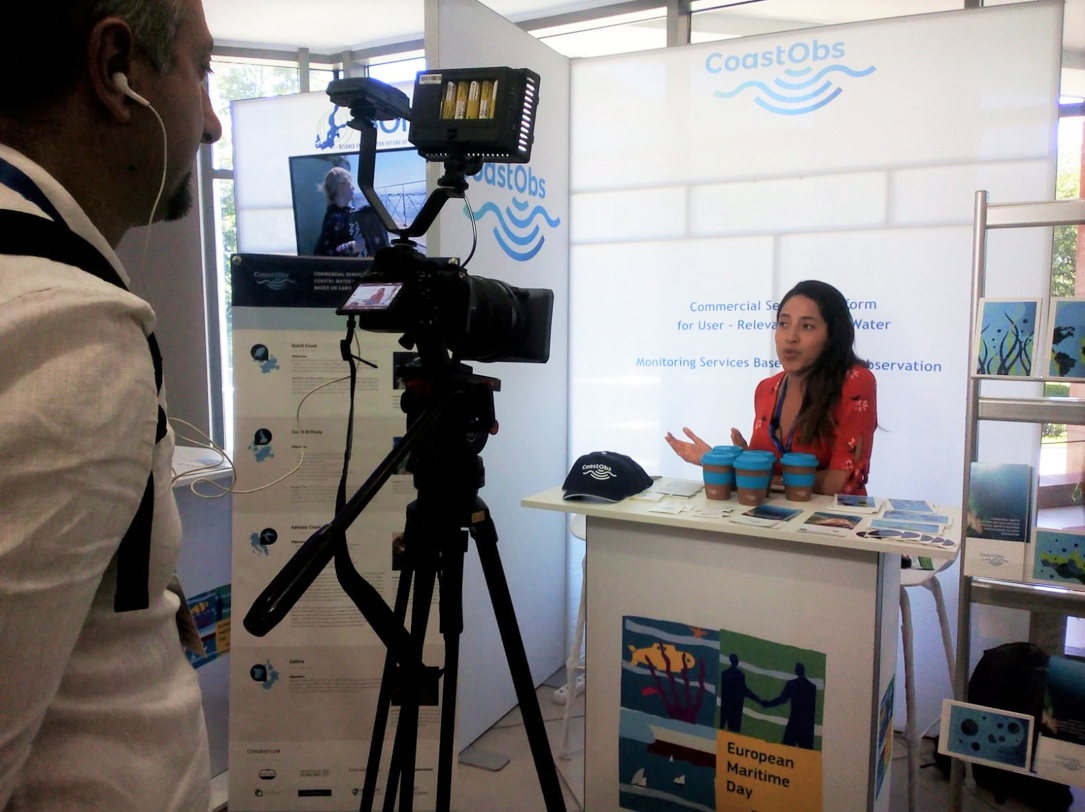
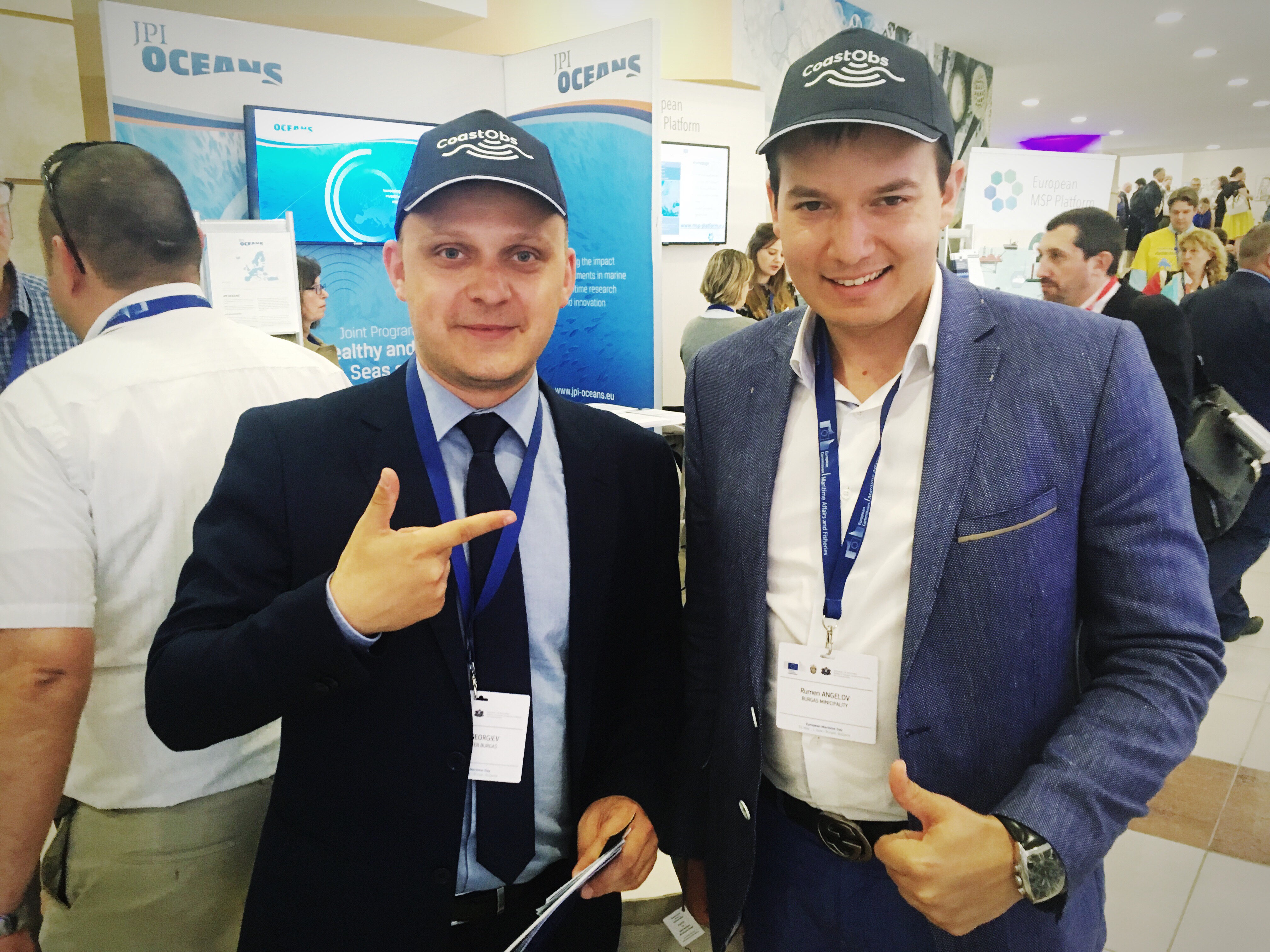
<p><span><span><span>Participating in the <a href="https://ec.europa.eu/maritimeaffairs/maritimeday/sites/mare-emd/files/2018-exhibition.pdf">exhibition</a>, CoastObs was able to talk to many attendees and to increase the visibility of our project among the marine and maritime community in Europe. We gave away plastic free gadgets, gathered CoastObservers for our <a href="http://coastobs.eu/newsletter">newsletter</a> and we gave an interview to the EU Commission on Maritime Affairs &amp; Fisheries.</span></span></span></p>

<p>&nbsp;</p>

<p><img alt="" class="img-responsive" src="http://coastobs.eu/assets/content/CoastObs_EMD_stand.PNG" /></p>

<p><img alt="" class="img-responsive" src="http://coastobs.eu/assets/content/CoastObs_EMD_dissemiantion gadgets.PNG" /></p>

<p><img alt="" class="img-responsive" src="http://coastobs.eu/assets/content/CoastObs_EMD_interview.PNG" /></p>

<p>&nbsp;</p>

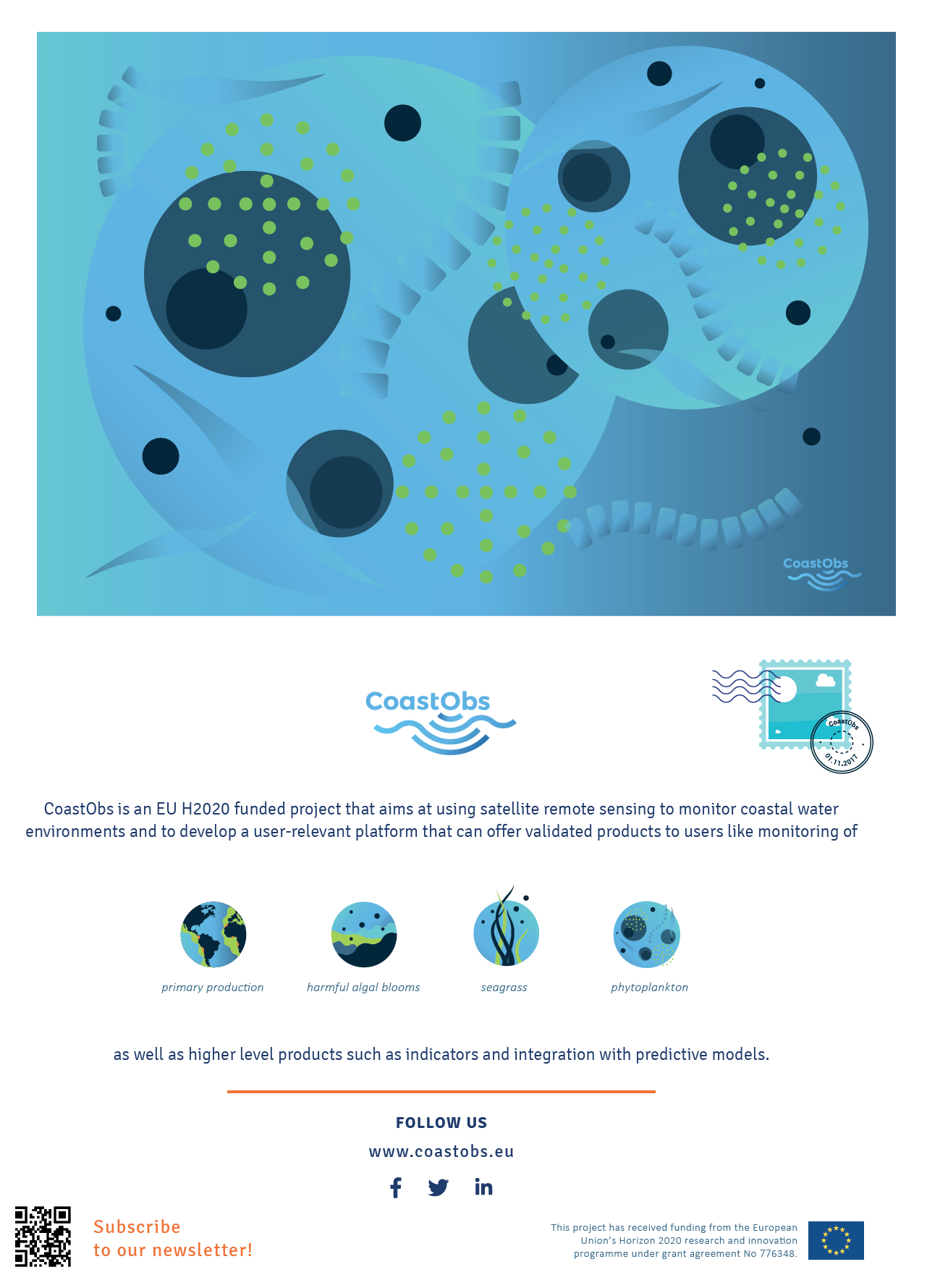
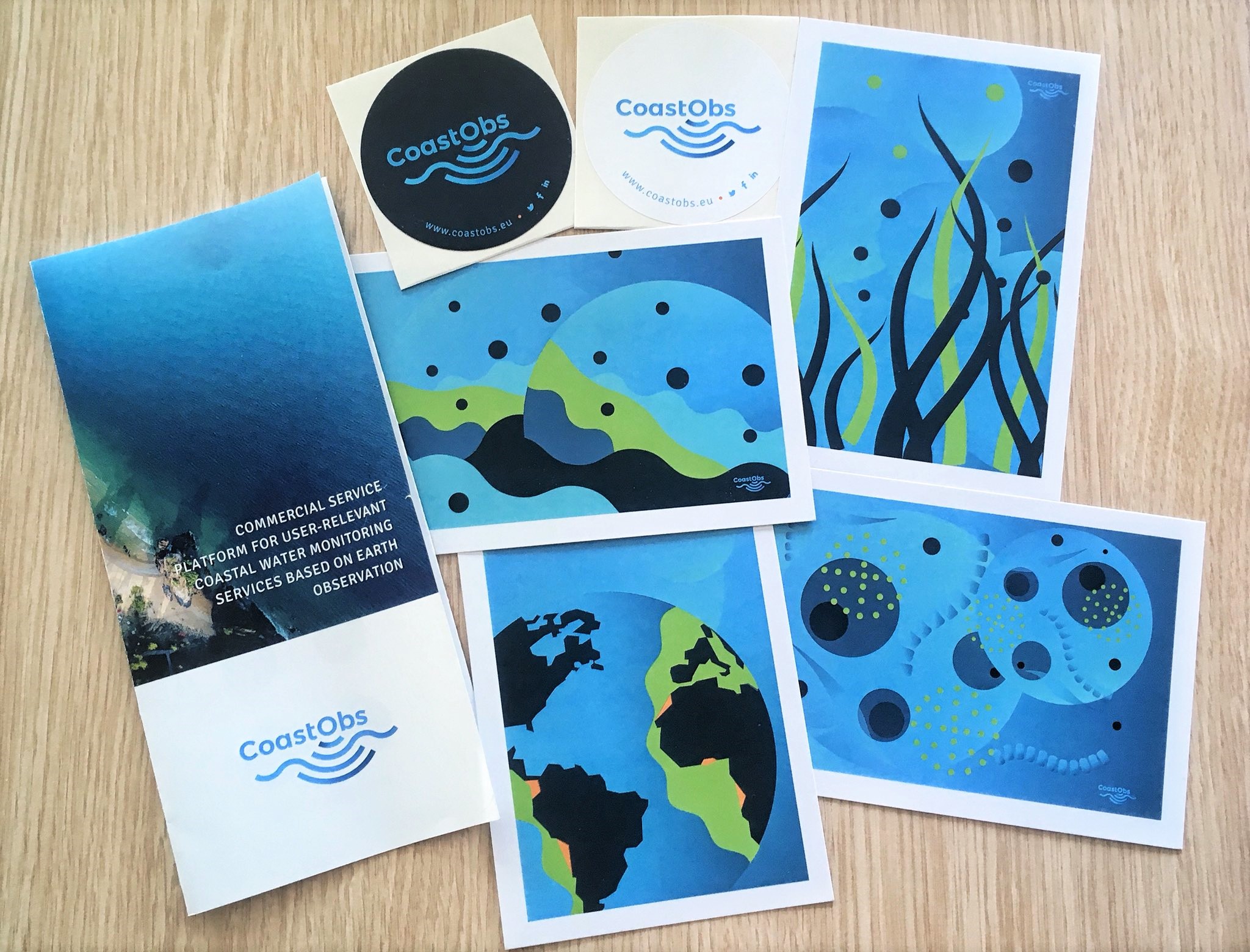
<p>If you couldn't attend and you would like to see some of the flyers and postcards we distributed you can <a href="http://coastobs.eu/assets/content/projects/CoastObs/coastobs-official-flyer.pdf">download the flyer from here</a> or see the example of our cool postcard on phyoplankton below.</p>

<p>&nbsp;</p>

<p><img alt="" class="img-responsive" src="http://coastobs.eu/assets/content/CoastObs_EMD_card_vert.PNG" /></p>

<p>&nbsp;</p>

<p><img alt="" class="img-responsive" src="http://coastobs.eu/assets/content/CoastObs_EMD_all dissemiantion prints.jpg" /></p>

<h4>&nbsp;</h4>

<h4>Thanks for all the attendees that stopped to say hi and those that we saw using our caps and our&nbsp;bamboo mugs at the coffee breaks and even in the cocktail party!</h4>

<p>&nbsp;</p>

<p><img alt="" class="img-responsive" src="http://coastobs.eu/assets/content/CoastObs_EMD_caps guys.JPG" /></p>

<h4>·</h4>

<h4>·</h4>

<h4>·</h4>

<p>If you haven't followed us you can find us in <a href="https://twitter.com/CoastObsProject">Twitter</a>, <a href="https://www.facebook.com/CoastObs/">Facebook</a> and <a href="https://www.linkedin.com/in/coastobs/">LinkedIn</a>.&nbsp;</p>

<p>&nbsp;</p>

<p>Until next year in Lisbon!&nbsp;</p>
]]></content>
      <uri>/news/6/recap-of-coastobs-participation-in-the-european-maritime-day-2018</uri>
      <newsContent>
        <newsContent>
          <newsId>6</newsId>
          <alpha3>eng</alpha3>
          <subject>Recap of CoastObs' participation in the European Maritime Day 2018</subject>
          <slug/>
          <lead><![CDATA[<p><em>@By CoastObs partner Mariana Mata Lara, Geonardo</em></p>

<p>&nbsp;</p>

<p>On its 11<sup>th</sup> edition, the <a href="https://ec.europa.eu/maritimeaffairs/maritimeday/en/burgas-2018">European Maritime Day</a> was held in Burgas, Bulgaria last May 31<sup>st</sup> and June 1<sup>st</sup> receiving about 900 participants. The most significant event related to maritime policy of the EU Member States, hosted also 18 stakeholder workshops and 27 exhibitors including <a href="coastobs.eu">CoastObs project</a>!</p>
]]></lead>
          <content><![CDATA[<p class="text-right"><cite>Photo:&nbsp;Tiago Garcia</cite></p>

<p>&nbsp;</p>
<img alt="" class="img-responsive" src="http://coastobs.eu/assets/content/emd_flag.PNG" />
<p class="text-right"><cite>Photo:&nbsp;Stefan Nedelchev</cite></p>

<p>&nbsp;</p>

<p>The <a href="https://ec.europa.eu/maritimeaffairs/maritimeday/en/programme-schedule">programme</a> included discussions around Marine Spatial Planning, Sustainable Fisheries &amp; Aquaculture, Regional Maritime Cooperation, Digitalisation &amp; Data for Maritime Applications, Common Information Sharing Environment, Sustainable Tourism &amp; Blue Bio-economy, Research &amp; Blue Growth for mentioning a few.</p>

<p>&nbsp;</p>

<p><span><span><span>Participating in the <a href="https://ec.europa.eu/maritimeaffairs/maritimeday/sites/mare-emd/files/2018-exhibition.pdf">exhibition</a>, CoastObs was able to talk to many attendees and to increase the visibility of our project among the marine and maritime community in Europe. We gave away plastic free gadgets, gathered CoastObservers for our <a href="http://coastobs.eu/newsletter">newsletter</a> and we gave an interview to the EU Commission on Maritime Affairs &amp; Fisheries.</span></span></span></p>

<p>&nbsp;</p>

<p><img alt="" class="img-responsive" src="http://coastobs.eu/assets/content/CoastObs_EMD_stand.PNG" /></p>

<p><img alt="" class="img-responsive" src="http://coastobs.eu/assets/content/CoastObs_EMD_dissemiantion gadgets.PNG" /></p>

<p><img alt="" class="img-responsive" src="http://coastobs.eu/assets/content/CoastObs_EMD_interview.PNG" /></p>

<p>&nbsp;</p>

<p>If you couldn't attend and you would like to see some of the flyers and postcards we distributed you can <a href="http://coastobs.eu/assets/content/projects/CoastObs/coastobs-official-flyer.pdf">download the flyer from here</a> or see the example of our cool postcard on phyoplankton below.</p>

<p>&nbsp;</p>

<p><img alt="" class="img-responsive" src="http://coastobs.eu/assets/content/CoastObs_EMD_card_vert.PNG" /></p>

<p>&nbsp;</p>

<p><img alt="" class="img-responsive" src="http://coastobs.eu/assets/content/CoastObs_EMD_all dissemiantion prints.jpg" /></p>

<h4>&nbsp;</h4>

<h4>Thanks for all the attendees that stopped to say hi and those that we saw using our caps and our&nbsp;bamboo mugs at the coffee breaks and even in the cocktail party!</h4>

<p>&nbsp;</p>

<p><img alt="" class="img-responsive" src="http://coastobs.eu/assets/content/CoastObs_EMD_caps guys.JPG" /></p>

<h4>·</h4>

<h4>·</h4>

<h4>·</h4>

<p>If you haven't followed us you can find us in <a href="https://twitter.com/CoastObsProject">Twitter</a>, <a href="https://www.facebook.com/CoastObs/">Facebook</a> and <a href="https://www.linkedin.com/in/coastobs/">LinkedIn</a>.&nbsp;</p>

<p>&nbsp;</p>

<p>Until next year in Lisbon!&nbsp;</p>
]]></content>
          <updated>
            <date>2018-06-04 15:30:07.000000</date>
            <timezone_type>3</timezone_type>
            <timezone>UTC</timezone>
          </updated>
        </newsContent>
        <newsContent>
          <newsId>6</newsId>
          <alpha3>hun</alpha3>
          <subject/>
          <slug/>
          <lead/>
          <content/>
          <updated>
            <date>2018-06-04 15:30:07.000000</date>
            <timezone_type>3</timezone_type>
            <timezone>UTC</timezone>
          </updated>
        </newsContent>
      </newsContent>
    </news>
    <news>
      <newsId>5</newsId>
      <date>
        <date>2018-05-15 09:48:04.000000</date>
        <timezone_type>3</timezone_type>
        <timezone>UTC</timezone>
      </date>
      <publishingDate>
        <date>2018-05-15 00:00:00.000000</date>
        <timezone_type>3</timezone_type>
        <timezone>UTC</timezone>
      </publishingDate>
      <expirationDate/>
      <thumbnail>news/Venice_group.800.JPG</thumbnail>
      <status>published</status>
      <uuid>92af5e44-2247-4bdf-b391-766bbecd537c</uuid>
      <updated>
        <date>2019-07-23 14:32:30.000000</date>
        <timezone_type>3</timezone_type>
        <timezone>UTC</timezone>
      </updated>
      <alpha3>eng</alpha3>
      <subject>First Project meeting at sunny Venice</subject>
      <slug/>
      <lead><![CDATA[<p><em>@By CoastObs partner Mariana Mata Lara, Geonardo</em></p>

<p>&nbsp;</p>

<p>The first Project Meeting was hosted by CoastObs partner <a href="https://www.cnr.it/en">CNR</a>&nbsp;in their <a href="http://www.ismar.cnr.it/">Institute of Marine Sciences</a> in Venice!&nbsp;</p>

<p>The three day meeting, which included a fieldtrip, was a success under sunny Italy. Click to check some photos!</p>
]]></lead>
      <content><![CDATA[<p>Our meeting was held at the Institute of Marine Sciences (ISMAR) from our partner CNR, located in the stunning former Arsenal of Venice. The Arsenal used to be the heart of the naval industry of Venice but now is too small for the dimensions of modern ships but perfect for a space for science and culture!</p>

<p>&nbsp;</p>

<p><img alt="" class="img-responsive" src="http://coastobs.eu/assets/content/ismar.jpg.JPG" /></p>

<p>&nbsp;</p>

<p>All partmers were present and we discussed what we have achieved in the first six months and what is coming next for the upcoming period.&nbsp;</p>

<p>&nbsp;</p>

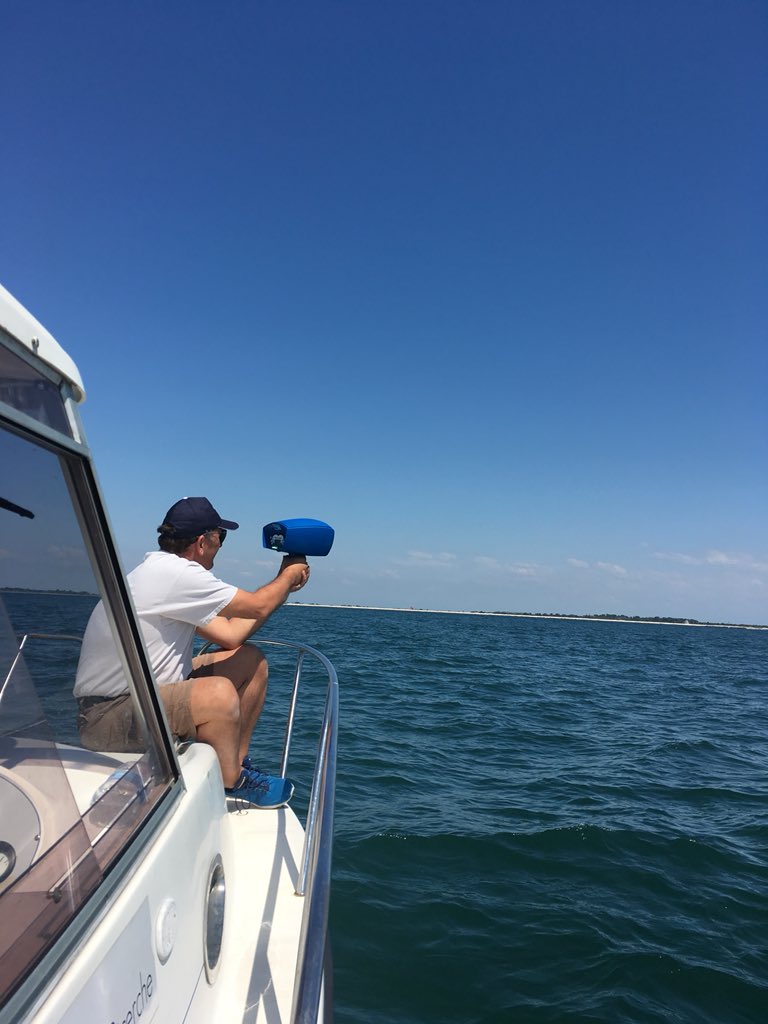
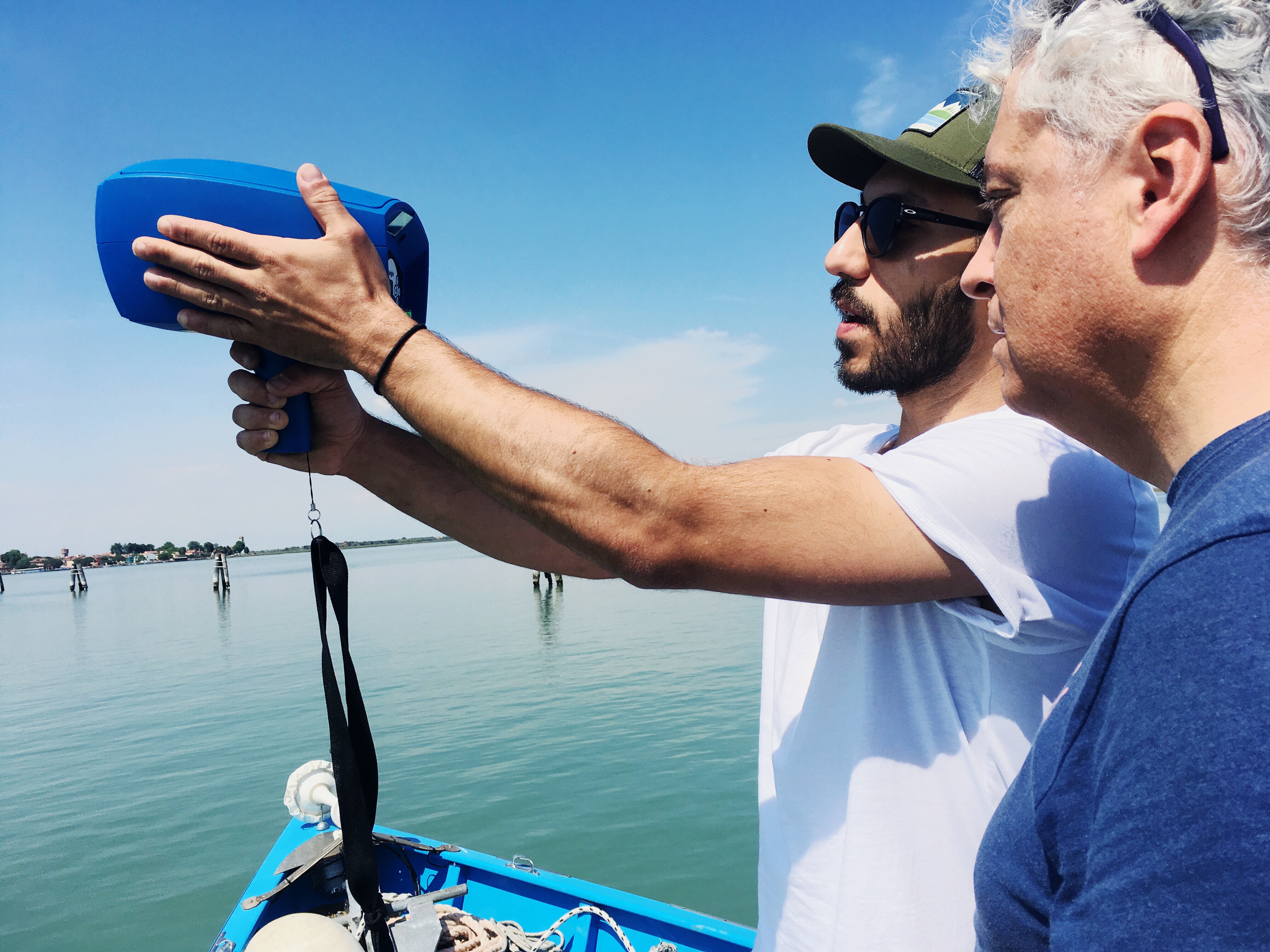
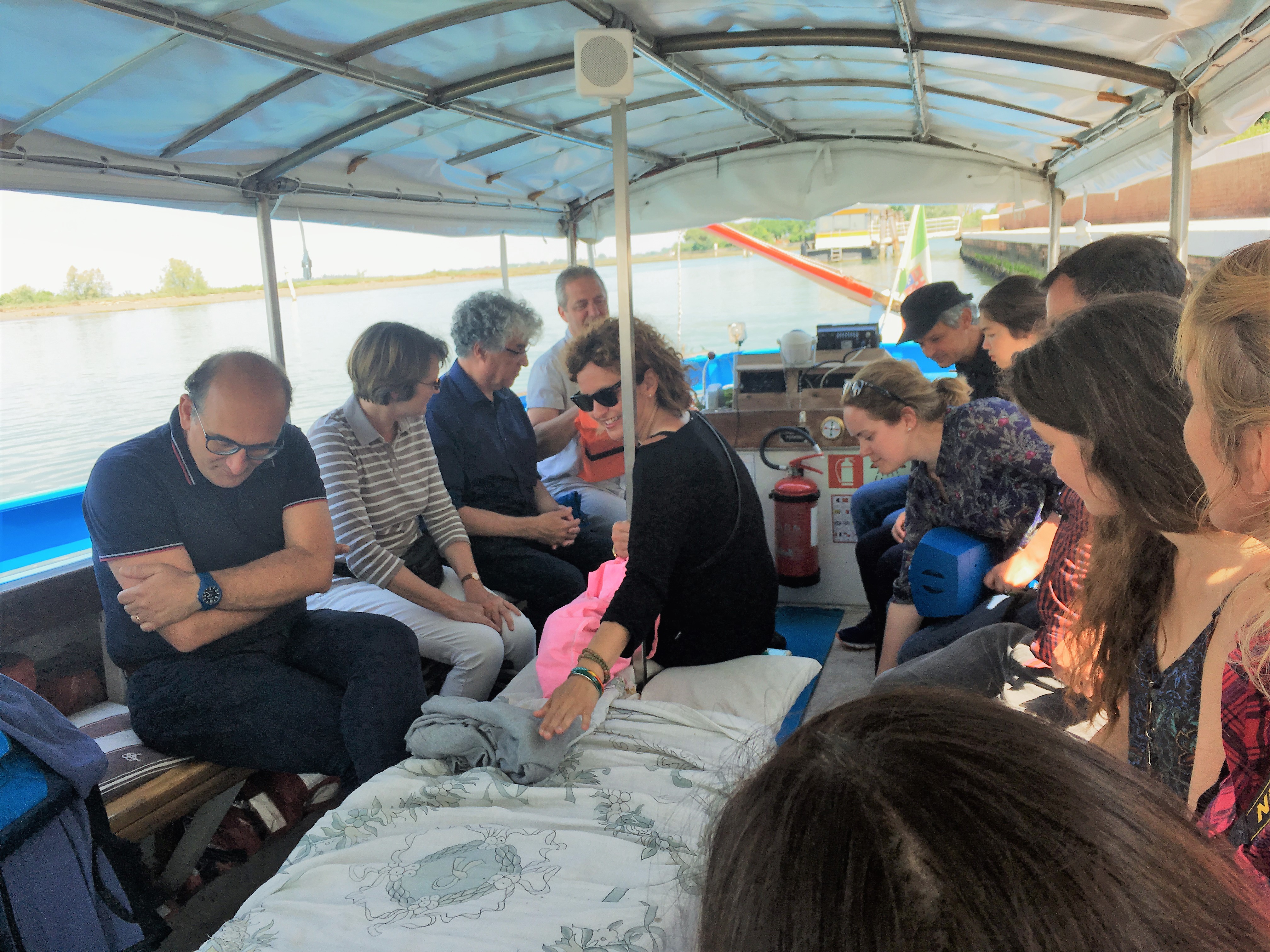
<p>As part of the agenda we also had a fieldtrip in the Venice lagoon to be sure we all know how to use the WISP-3,&nbsp;a portable water quality spectrometer&nbsp;that measures the reflectance ('the colour') of the water. From this optical signal it instantly derives the concentrations of water quality indicators such as chlorophyll and suspended matter, without the need for laboratory analyses.&nbsp;</p>

<p>&nbsp;</p>

<p><img alt="" class="img-responsive" src="http://coastobs.eu/assets/content/WISP_boat.JPG" /></p>

<p>&nbsp;</p>

<p>&nbsp;</p>

<p><img alt="" class="img-responsive" src="http://coastobs.eu/assets/content/boat.JPG" /></p>

<p>&nbsp;</p>

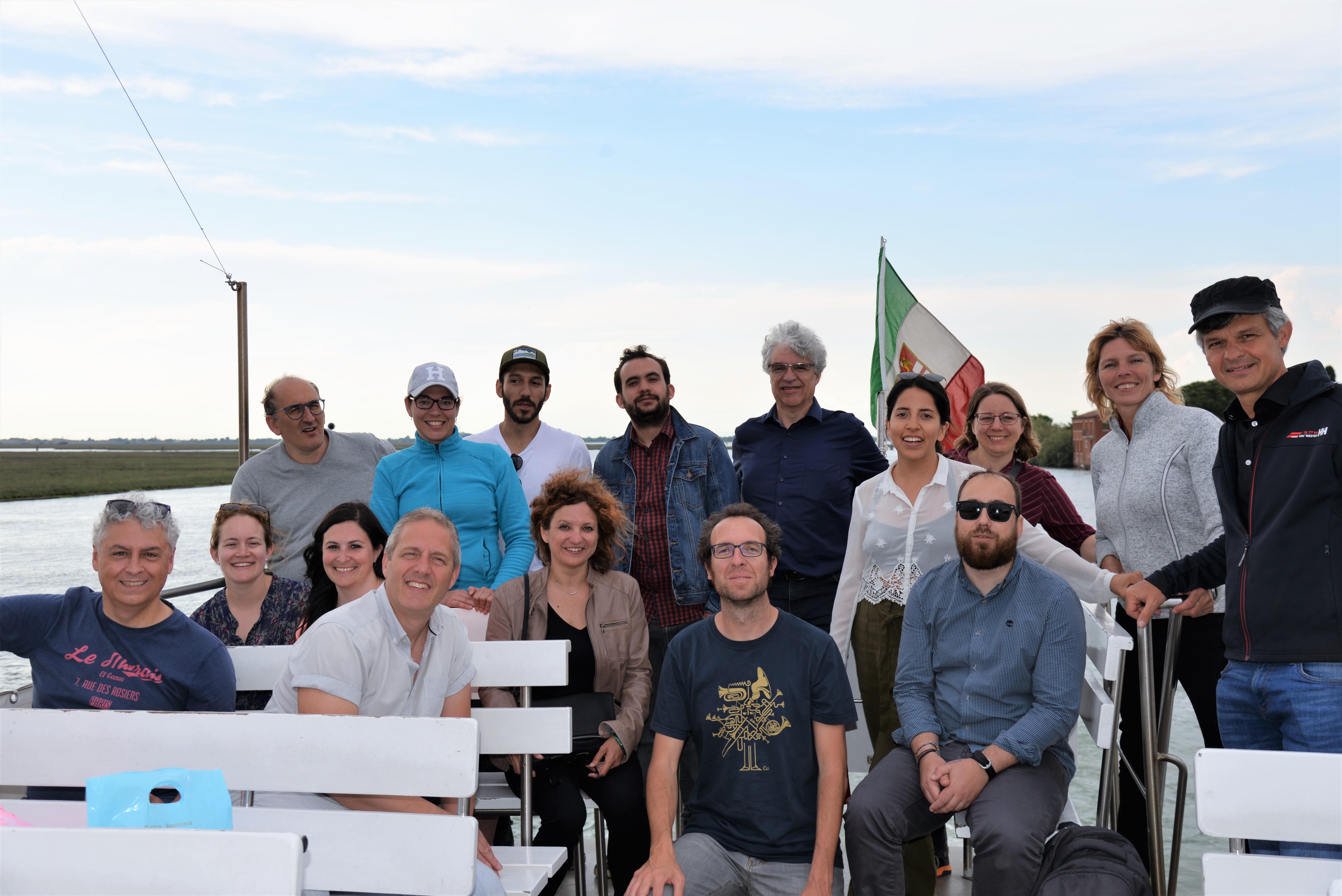
<p>We are very excited about was upcoming in the next period. Stay tunned to see all the events we'll attend, the user we'll meet and the developments we'll achieve!</p>

<p>&nbsp;</p>

<p><img alt="" class="img-responsive" src="http://coastobs.eu/assets/content/Consortium_boat.JPG" /></p>
]]></content>
      <uri>/news/5/first-project-meeting-at-sunny-venice</uri>
      <newsContent>
        <newsContent>
          <newsId>5</newsId>
          <alpha3>eng</alpha3>
          <subject>First Project meeting at sunny Venice</subject>
          <slug/>
          <lead><![CDATA[<p><em>@By CoastObs partner Mariana Mata Lara, Geonardo</em></p>

<p>&nbsp;</p>

<p>The first Project Meeting was hosted by CoastObs partner <a href="https://www.cnr.it/en">CNR</a>&nbsp;in their <a href="http://www.ismar.cnr.it/">Institute of Marine Sciences</a> in Venice!&nbsp;</p>

<p>The three day meeting, which included a fieldtrip, was a success under sunny Italy. Click to check some photos!</p>
]]></lead>
          <content><![CDATA[<p>Our meeting was held at the Institute of Marine Sciences (ISMAR) from our partner CNR, located in the stunning former Arsenal of Venice. The Arsenal used to be the heart of the naval industry of Venice but now is too small for the dimensions of modern ships but perfect for a space for science and culture!</p>

<p>&nbsp;</p>

<p><img alt="" class="img-responsive" src="http://coastobs.eu/assets/content/ismar.jpg.JPG" /></p>

<p>&nbsp;</p>

<p>All partmers were present and we discussed what we have achieved in the first six months and what is coming next for the upcoming period.&nbsp;</p>

<p>&nbsp;</p>

<p>As part of the agenda we also had a fieldtrip in the Venice lagoon to be sure we all know how to use the WISP-3,&nbsp;a portable water quality spectrometer&nbsp;that measures the reflectance ('the colour') of the water. From this optical signal it instantly derives the concentrations of water quality indicators such as chlorophyll and suspended matter, without the need for laboratory analyses.&nbsp;</p>

<p>&nbsp;</p>

<p><img alt="" class="img-responsive" src="http://coastobs.eu/assets/content/WISP_boat.JPG" /></p>

<p>&nbsp;</p>

<p>&nbsp;</p>

<p><img alt="" class="img-responsive" src="http://coastobs.eu/assets/content/boat.JPG" /></p>

<p>&nbsp;</p>

<p>We are very excited about was upcoming in the next period. Stay tunned to see all the events we'll attend, the user we'll meet and the developments we'll achieve!</p>

<p>&nbsp;</p>

<p><img alt="" class="img-responsive" src="http://coastobs.eu/assets/content/Consortium_boat.JPG" /></p>
]]></content>
          <updated>
            <date>2018-05-24 11:45:22.000000</date>
            <timezone_type>3</timezone_type>
            <timezone>UTC</timezone>
          </updated>
        </newsContent>
        <newsContent>
          <newsId>5</newsId>
          <alpha3>hun</alpha3>
          <subject/>
          <slug/>
          <lead/>
          <content/>
          <updated>
            <date>2018-05-24 11:45:22.000000</date>
            <timezone_type>3</timezone_type>
            <timezone>UTC</timezone>
          </updated>
        </newsContent>
      </newsContent>
    </news>
    <news>
      <newsId>4</newsId>
      <date>
        <date>2018-04-23 09:48:04.000000</date>
        <timezone_type>3</timezone_type>
        <timezone>UTC</timezone>
      </date>
      <publishingDate>
        <date>2018-04-23 00:00:00.000000</date>
        <timezone_type>3</timezone_type>
        <timezone>UTC</timezone>
      </publishingDate>
      <expirationDate/>
      <thumbnail>news/normal_wide.800.jpg</thumbnail>
      <status>published</status>
      <uuid>94817a7d-bd02-4ac3-8ead-f8e80c51a358</uuid>
      <updated>
        <date>2019-07-23 14:38:33.000000</date>
        <timezone_type>3</timezone_type>
        <timezone>UTC</timezone>
      </updated>
      <alpha3>eng</alpha3>
      <subject>CoastObs will attend the European Maritime Day 2018!</subject>
      <slug/>
      <lead><![CDATA[<p><em>@By CoastObs partner Mariana Mata Lara, Geonardo</em></p>

<p>&nbsp;</p>

<p>The European Commission's Directorate General for Maritime Affairs and Fisheries will bring, as in every year, the European Maritime Day! This year the EMD 2018 will be hold in Burgas, Bulgaria and it&nbsp;will take place on 31 May and 1 June 2018.</p>

<p>You can come and say hi to us as CoastObs will be at the <a href="https://ec.europa.eu/maritimeaffairs/maritimeday/sites/mare-emd/files/2018-exhibition.pdf">exhibition area</a>! We will have some gifts ready for those that stop by to find out about our project.&nbsp;</p>
]]></lead>
      <content><![CDATA[<p>&nbsp;</p>

<p>The EMD 2018&nbsp;<a href="https://ec.europa.eu/maritimeaffairs/maritimeday/sites/mare-emd/files/2018-draft-programme_en.pdf">conference programme</a>&nbsp;includes:</p>

<ul>
	<li><a href="https://ec.europa.eu/maritimeaffairs/maritimeday/sites/mare-emd/files/2018-workshops.pdf">18 stakeholders workshops</a>&nbsp;covering a wide range of topical themes:&nbsp;Aquaculture and the blue bio-economy, on marine litter, digitalization and big data, marine research, innovation, ports, maritime security, spatial planning, offshore energy and ocean literacy.</li>
</ul>

<ul>
	<li>&nbsp;A political opening, with&nbsp;<strong>Karmenu Vella</strong>, European Commissioner for Environment, Maritime Affairs and Fisheries and Iskra Mihaylova, Chair of the Regional Development Committee at the European Parliament. Karmenu Vella together with&nbsp;<strong>Ivaylo Moskovski</strong>, Bulgarian Minister of Transport, Information Technology and Communications will welcome a number of fellow Ministers around the Black Sea to share their vision for the development of the Blue economy in the region (<strong>Ministerial Declaration towards a Common Maritime Agenda in the Black Sea</strong>).</li>
</ul>

<ul>
	<li>A plenary debate on what we termed&nbsp;<em>‘<strong>Big Bang Black Sea’</strong></em>&nbsp;with leaders from the European Union, national governments, international organizations and NGOs to discuss challenges and opportunities for sustainable blue growth in the Black Sea.</li>
</ul>

<ul>
	<li>Three DG MARE info sessions on&nbsp;<strong><em>Measuring the EU Blue Economy</em></strong>,&nbsp;<strong><em>Turning Marine Litter into a sustainable business</em></strong>, and&nbsp;<strong><em>Financing strategic cooperation for Blue Growth</em></strong>.</li>
</ul>

<ul>
	<li>&nbsp;A plenary session on&nbsp;<strong><em>European funds post 2020</em></strong><strong>&nbsp;<em>– what’s new?</em></strong>&nbsp;that will provide an indication on the expected future funding landscape for fisheries and blue growth as well as for maritime research and innovation.</li>
</ul>

<ul>
	<li>A networking reception in a splendid location looking out to the harbour, an exhibition and a pitch stage during the networking breaks.</li>
</ul>

<p>&nbsp;</p>

<p>You can find more about the event <a href="https://ec.europa.eu/maritimeaffairs/maritimeday/">here</a>.&nbsp;</p>

<p>&nbsp;</p>

<p>See you in Bulgaria!</p>
]]></content>
      <uri>/news/4/coastobs-will-attend-the-european-maritime-day-2018</uri>
      <newsContent>
        <newsContent>
          <newsId>4</newsId>
          <alpha3>eng</alpha3>
          <subject>CoastObs will attend the European Maritime Day 2018!</subject>
          <slug/>
          <lead><![CDATA[<p><em>@By CoastObs partner Mariana Mata Lara, Geonardo</em></p>

<p>&nbsp;</p>

<p>The European Commission's Directorate General for Maritime Affairs and Fisheries will bring, as in every year, the European Maritime Day! This year the EMD 2018 will be hold in Burgas, Bulgaria and it&nbsp;will take place on 31 May and 1 June 2018.</p>

<p>You can come and say hi to us as CoastObs will be at the <a href="https://ec.europa.eu/maritimeaffairs/maritimeday/sites/mare-emd/files/2018-exhibition.pdf">exhibition area</a>! We will have some gifts ready for those that stop by to find out about our project.&nbsp;</p>
]]></lead>
          <content><![CDATA[<p>&nbsp;</p>

<p>The EMD 2018&nbsp;<a href="https://ec.europa.eu/maritimeaffairs/maritimeday/sites/mare-emd/files/2018-draft-programme_en.pdf">conference programme</a>&nbsp;includes:</p>

<ul>
	<li><a href="https://ec.europa.eu/maritimeaffairs/maritimeday/sites/mare-emd/files/2018-workshops.pdf">18 stakeholders workshops</a>&nbsp;covering a wide range of topical themes:&nbsp;Aquaculture and the blue bio-economy, on marine litter, digitalization and big data, marine research, innovation, ports, maritime security, spatial planning, offshore energy and ocean literacy.</li>
</ul>

<ul>
	<li>&nbsp;A political opening, with&nbsp;<strong>Karmenu Vella</strong>, European Commissioner for Environment, Maritime Affairs and Fisheries and Iskra Mihaylova, Chair of the Regional Development Committee at the European Parliament. Karmenu Vella together with&nbsp;<strong>Ivaylo Moskovski</strong>, Bulgarian Minister of Transport, Information Technology and Communications will welcome a number of fellow Ministers around the Black Sea to share their vision for the development of the Blue economy in the region (<strong>Ministerial Declaration towards a Common Maritime Agenda in the Black Sea</strong>).</li>
</ul>

<ul>
	<li>A plenary debate on what we termed&nbsp;<em>‘<strong>Big Bang Black Sea’</strong></em>&nbsp;with leaders from the European Union, national governments, international organizations and NGOs to discuss challenges and opportunities for sustainable blue growth in the Black Sea.</li>
</ul>

<ul>
	<li>Three DG MARE info sessions on&nbsp;<strong><em>Measuring the EU Blue Economy</em></strong>,&nbsp;<strong><em>Turning Marine Litter into a sustainable business</em></strong>, and&nbsp;<strong><em>Financing strategic cooperation for Blue Growth</em></strong>.</li>
</ul>

<ul>
	<li>&nbsp;A plenary session on&nbsp;<strong><em>European funds post 2020</em></strong><strong>&nbsp;<em>– what’s new?</em></strong>&nbsp;that will provide an indication on the expected future funding landscape for fisheries and blue growth as well as for maritime research and innovation.</li>
</ul>

<ul>
	<li>A networking reception in a splendid location looking out to the harbour, an exhibition and a pitch stage during the networking breaks.</li>
</ul>

<p>&nbsp;</p>

<p>You can find more about the event <a href="https://ec.europa.eu/maritimeaffairs/maritimeday/">here</a>.&nbsp;</p>

<p>&nbsp;</p>

<p>See you in Bulgaria!</p>
]]></content>
          <updated>
            <date>2018-05-24 10:11:07.000000</date>
            <timezone_type>3</timezone_type>
            <timezone>UTC</timezone>
          </updated>
        </newsContent>
        <newsContent>
          <newsId>4</newsId>
          <alpha3>hun</alpha3>
          <subject/>
          <slug/>
          <lead/>
          <content/>
          <updated>
            <date>2018-05-24 10:11:07.000000</date>
            <timezone_type>3</timezone_type>
            <timezone>UTC</timezone>
          </updated>
        </newsContent>
      </newsContent>
    </news>
    <news>
      <newsId>3</newsId>
      <date>
        <date>2018-04-11 14:54:32.000000</date>
        <timezone_type>3</timezone_type>
        <timezone>UTC</timezone>
      </date>
      <publishingDate>
        <date>2018-04-11 00:00:00.000000</date>
        <timezone_type>3</timezone_type>
        <timezone>UTC</timezone>
      </publishingDate>
      <expirationDate/>
      <thumbnail>news/Photo-1.JPG</thumbnail>
      <status>published</status>
      <uuid>5ebb8174-a6a1-4a37-9027-e2906a386d9b</uuid>
      <updated>
        <date>2019-07-23 14:32:30.000000</date>
        <timezone_type>3</timezone_type>
        <timezone>UTC</timezone>
      </updated>
      <alpha3>eng</alpha3>
      <subject>Meeting with Shellfish producers and fisherman representatives</subject>
      <slug/>
      <lead><![CDATA[<p><em>@ By CoastObs member Laurent Barille, Univeristy of Nantes.</em></p>

<p>&nbsp;</p>

<p>On the 9th of April, University of Nantes participated to a meeting organized by Shellfish Farmers&nbsp; (<a href="https://www.crc-pays-de-loire.fr/">Regional Shellfish Committee</a>)&nbsp;and <a href="http://www.corepem.fr/">Fisherman representatives</a>&nbsp;to discuss a field sampling strategy to map wild oyster beds and macroalgae in Bourgneuf Bay, France.&nbsp;With the increase of water temperature, wild oysters progressively colonized intertidal areas, forming dense reefs.</p>
]]></lead>
      <content><![CDATA[<p><cite>Colonization of large rocky areas by horizontally-growing wild Pacific oysters <em>Crassostrea gigas</em></cite></p>

<p>&nbsp;</p>

<p>After recurrent mass summer mortalities of cultivated oysters spat observed along the European coasts and a subsequent decline of the cultivated stock, oyster producers envisaged exploiting wild oysters as a resource to compensate for their losses. This situation induced conflicts with recreational and professional fishermen generating a need to map and manage wild oyster reefs.</p>

<p class="lead">&nbsp;</p>

<p><img alt="" class="img-responsive" src="http://coastobs.eu/assets/content/Photo 2.JPG" /></p>

<p><cite>Dense brown macroalgal belts in the mid-intertidal area (<em>Fucus</em> sp., <em>Ascophyllum nodosum</em>)</cite></p>

<p>&nbsp;</p>

<p>Intertidal brown macroalgae (<em>Fucus</em> sp., <em>Ascophyllum nodosum</em>) are about to be exploited in Bourgneuf bay for a niche market in health food shops. Macroalgal maps are needed to identify the resource, set up an exploitation plan and deliver the first licenses. The professionals had already set up a sampling programme and we suggested to optimize the sampling effort using EO data. We presented spatial distributions maps obtained with Sentinel 2 in 2017 and explained that brown macroalgae were the best classified, but that the detection was less efficient for oysters beds using optical data.</p>

<p>&nbsp;</p>

<p><span><strong><span><span><span>To overcome a slight skepticism about EO products, we proposed to provide spatial distribution maps that would be processed using the most recent S2 image. On the 17th of April, an S2 image was acquired at low tide for Bourgneuf bay. The maps produced by the CoastObs consortium would be challenged by all the ground-truthing data collected by the Shellfish Farmers representatives.</span></span></span></strong></span></p>

<p>&nbsp;</p>

<p>We were invited to join them during a field campaign on Thursday the 16th of May. Percentage cover of different bottom types have been quantified at low tide and the accuracy of S2 maps will be tested by the end-users themselves.</p>

<p><img alt="" class="img-responsive" src="http://coastobs.eu/assets/content/Photo 3.JPG" /></p>

<p><cite>Join field campaign in Bourgneuf bay at low tide on the 16<sup>th</sup> of May : Appolline and Hugo from the CRC (Regional Shellfish Committee),&nbsp; Philippe and Laurent from Nantes University.</cite></p>
]]></content>
      <uri>/news/3/meeting-with-shellfish-producers-and-fisherman-representatives</uri>
      <newsContent>
        <newsContent>
          <newsId>3</newsId>
          <alpha3>eng</alpha3>
          <subject>Meeting with Shellfish producers and fisherman representatives</subject>
          <slug/>
          <lead><![CDATA[<p><em>@ By CoastObs member Laurent Barille, Univeristy of Nantes.</em></p>

<p>&nbsp;</p>

<p>On the 9th of April, University of Nantes participated to a meeting organized by Shellfish Farmers&nbsp; (<a href="https://www.crc-pays-de-loire.fr/">Regional Shellfish Committee</a>)&nbsp;and <a href="http://www.corepem.fr/">Fisherman representatives</a>&nbsp;to discuss a field sampling strategy to map wild oyster beds and macroalgae in Bourgneuf Bay, France.&nbsp;With the increase of water temperature, wild oysters progressively colonized intertidal areas, forming dense reefs.</p>
]]></lead>
          <content><![CDATA[<p><cite>Colonization of large rocky areas by horizontally-growing wild Pacific oysters <em>Crassostrea gigas</em></cite></p>

<p>&nbsp;</p>

<p>After recurrent mass summer mortalities of cultivated oysters spat observed along the European coasts and a subsequent decline of the cultivated stock, oyster producers envisaged exploiting wild oysters as a resource to compensate for their losses. This situation induced conflicts with recreational and professional fishermen generating a need to map and manage wild oyster reefs.</p>

<p class="lead">&nbsp;</p>

<p><img alt="" class="img-responsive" src="http://coastobs.eu/assets/content/Photo 2.JPG" /></p>

<p><cite>Dense brown macroalgal belts in the mid-intertidal area (<em>Fucus</em> sp., <em>Ascophyllum nodosum</em>)</cite></p>

<p>&nbsp;</p>

<p>Intertidal brown macroalgae (<em>Fucus</em> sp., <em>Ascophyllum nodosum</em>) are about to be exploited in Bourgneuf bay for a niche market in health food shops. Macroalgal maps are needed to identify the resource, set up an exploitation plan and deliver the first licenses. The professionals had already set up a sampling programme and we suggested to optimize the sampling effort using EO data. We presented spatial distributions maps obtained with Sentinel 2 in 2017 and explained that brown macroalgae were the best classified, but that the detection was less efficient for oysters beds using optical data.</p>

<p>&nbsp;</p>

<p><span><strong><span><span><span>To overcome a slight skepticism about EO products, we proposed to provide spatial distribution maps that would be processed using the most recent S2 image. On the 17th of April, an S2 image was acquired at low tide for Bourgneuf bay. The maps produced by the CoastObs consortium would be challenged by all the ground-truthing data collected by the Shellfish Farmers representatives.</span></span></span></strong></span></p>

<p>&nbsp;</p>

<p>We were invited to join them during a field campaign on Thursday the 16th of May. Percentage cover of different bottom types have been quantified at low tide and the accuracy of S2 maps will be tested by the end-users themselves.</p>

<p><img alt="" class="img-responsive" src="http://coastobs.eu/assets/content/Photo 3.JPG" /></p>

<p><cite>Join field campaign in Bourgneuf bay at low tide on the 16<sup>th</sup> of May : Appolline and Hugo from the CRC (Regional Shellfish Committee),&nbsp; Philippe and Laurent from Nantes University.</cite></p>
]]></content>
          <updated>
            <date>2018-05-23 15:00:39.000000</date>
            <timezone_type>3</timezone_type>
            <timezone>UTC</timezone>
          </updated>
        </newsContent>
        <newsContent>
          <newsId>3</newsId>
          <alpha3>hun</alpha3>
          <subject/>
          <slug/>
          <lead/>
          <content/>
          <updated>
            <date>2018-05-23 15:00:39.000000</date>
            <timezone_type>3</timezone_type>
            <timezone>UTC</timezone>
          </updated>
        </newsContent>
      </newsContent>
    </news>
    <news>
      <newsId>1</newsId>
      <date>
        <date>2018-01-08 12:43:40.000000</date>
        <timezone_type>3</timezone_type>
        <timezone>UTC</timezone>
      </date>
      <publishingDate>
        <date>2018-01-08 12:43:00.000000</date>
        <timezone_type>3</timezone_type>
        <timezone>UTC</timezone>
      </publishingDate>
      <expirationDate/>
      <thumbnail>news/project-launch.800.jpg</thumbnail>
      <status>published</status>
      <uuid>ace9efcc-a321-4b86-87aa-4b7d0a1a4b9b</uuid>
      <updated>
        <date>2018-04-11 14:15:46.000000</date>
        <timezone_type>3</timezone_type>
        <timezone>UTC</timezone>
      </updated>
      <alpha3>eng</alpha3>
      <subject>CoastObs, our project is launched!</subject>
      <slug/>
      <lead><![CDATA[<p><em>@ By CoastObs member Mariana Mata Lara, Geonardo.</em></p>

<p>&nbsp;</p>

<p>CoastObs, a 3-year EU-H2020 project focused on developing <strong>a user-relevant service platform </strong>for <strong>coastal water monitoring </strong>with validated products derived from Earth Observation (EO), was launched on 23-24 November in Wageningen, Netherlands, at the premises of the project coordinator <a href="http://www.waterinsight.nl/">Water Insight</a>.</p>
]]></lead>
      <content><![CDATA[<h3><strong>What’s the project about?</strong></h3>

<p>&nbsp;</p>

<p>The mission of the CoastObs project is to use satellite remote sensing to&nbsp;<strong>monitor coastal water environments</strong>&nbsp;and to develop a user-relevant platform that can offer validated products to users including&nbsp;<strong>monitoring of seagrass and macroalgae, phytoplankton size classes, primary production,&nbsp;</strong>and<strong>&nbsp;harmful algae</strong>&nbsp;as well as higher level products such as indicators and integration with predictive models.</p>

<p>&nbsp;</p>

<h3><strong>Why is this relevant?</strong></h3>

<p>&nbsp;</p>

<p>The&nbsp;<strong>quality and ecological status of European and global coastal waters is an area of real concern</strong><strong>because of the multiple and conflicting pressures from anthropogenic perturbation and environmental change</strong>. Coastal areas are among the most populated areas in the world and the continuing population growth is resulting in pressures for greater exploitation of the available ecosystem services.</p>

<p>The increased use of the coastal waters for energy and food production when combined with the impacts from pollutants and sediment from terrestrial catchments can result in profound societal impacts including eutrophication, changes in coastal hydro morphology, loss in habitats and human health risks.</p>

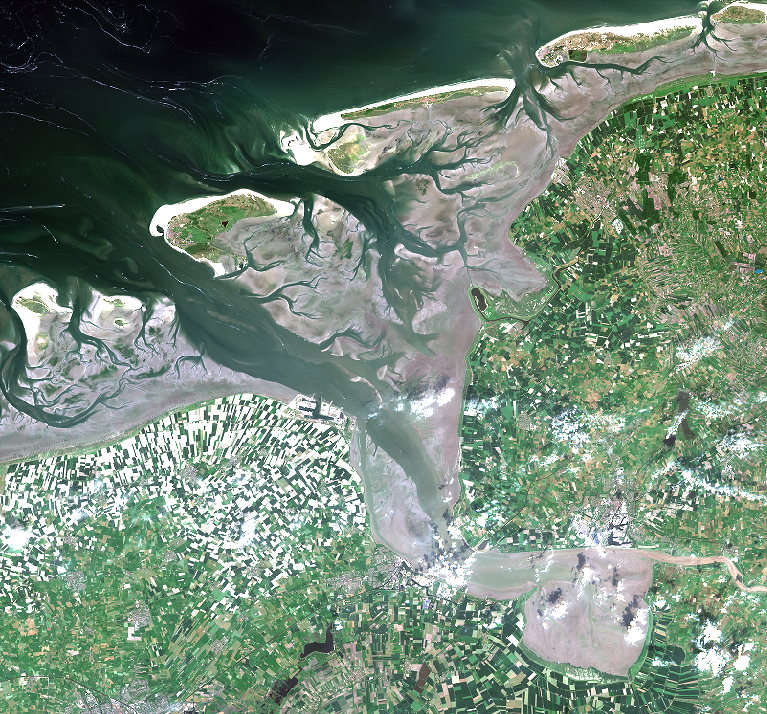
<p>Therefore,&nbsp;<strong>monitoring the multiple and often conflicting uses of the coastal zone&nbsp;</strong>including aquaculture, fisheries, wind, tidal energy, cooling waters, shipping and tourism<strong>&nbsp;is extremely important for aiming at a sustainable management of the these highly dynamic coastal environments</strong>. However, traditional&nbsp;<em>in situ</em>sampling monitoring has been widely recognised as being inadequate in characterising the ecological status (both in space and time) of those environments resulting in significant uncertainties. Nevertheless, satellite remote sensing offers a real opportunity to provide synoptic coverage and quantify the spatial and temporal variability in the physical and biogeochemical properties of these vulnerable environments, which can be developed for more effective monitoring and improving the management and sustainable exploitation of the coastal zone.</p>

<p>&nbsp;</p>

<p><img alt="" class="img-responsive" src="http://coastobs.eu/assets/content/satellite_image_1.png" /></p>

<p>&nbsp;</p>

<h3><strong>How is it done?</strong></h3>

<p>&nbsp;</p>

<p>The data derived from satellite images have become more and more accurate: more spectral bands allow distinguishing more substances in the water (chlorophyll, suspended matter, organic material, cyanobacteria pigment), and the higher spatial resolution makes monitoring of smaller water bodies possible. With the advent of the Copernicus&nbsp;<a href="http://www.esa.int/Our_Activities/Observing_the_Earth/Copernicus/Overview4">Sentinel missions</a>, operational water monitoring services for coastal waters comes within reach. The Sentinels missions of the&nbsp;<a href="http://www.esa.int/Our_Activities/Observing_the_Earth/Copernicus/Overview3">Copernicus programme</a>, give access to a fully operational EO capacity. With the information from Sentinel 2 and 3, CoastObs will develop user relevant (marketable) innovative EO-based information products and services that are not yet - as such - on the market and will create business opportunities based on existing information needs.</p>

<p>&nbsp;</p>

<h3><strong>What will the approach be?</strong></h3>

<p>&nbsp;</p>

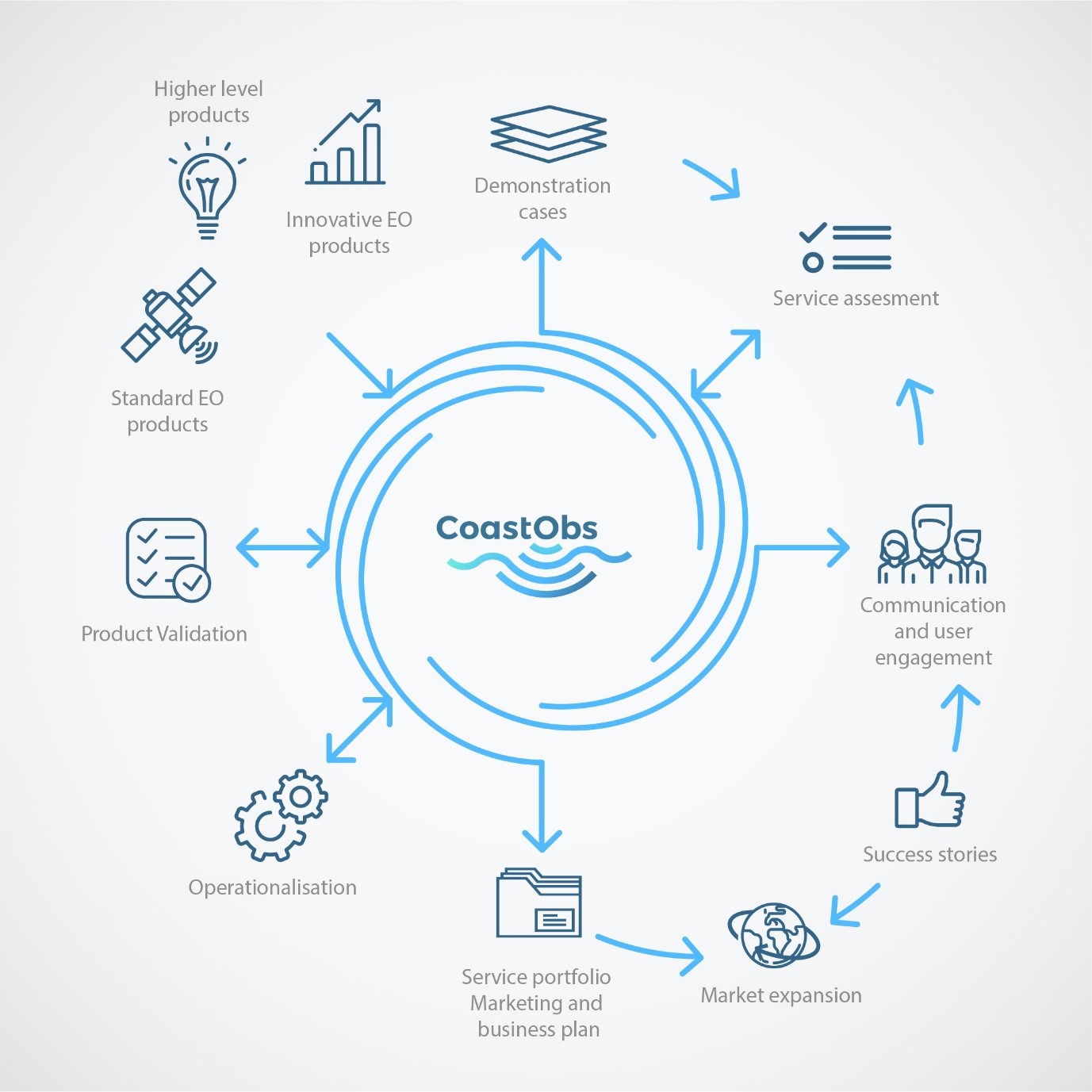
<p>CoastObs partners will be in dialogue with users from various sectors in order to create tailored products at highly reduced costs per user that stick to their requirements. To demonstrate the multi-user approach of CoastObs and its operational services, the project will carry out four case studies in coastal areas where multiple stakeholders (dredging companies, aquaculture businesses, national monitoring institutes, etc.) have indicated a need for better information on water quality. The services will be assessed with respect to their quality, fitness for purpose and added value for the users and once they are validated and operationalized, the products will be included in a service portfolio for a market expansion. Lastly, CoastObs will provide training and consulting services for the target audiences dedicated to improving the capacity building of the users and to facilitate the up-take of the product after the duration of the project.</p>

<p>&nbsp;</p>

<p><img alt="" class="img-responsive" src="http://coastobs.eu/assets/content/infographic_1.jpg" style="height:auto" /></p>

<p>&nbsp;</p>

<h3><strong>Who is CoastObs?</strong></h3>

<p>&nbsp;</p>

<p>The project will be carried out by a consortium of 8 partners from 6 different countries:</p>

<ul>
	<li><a href="http://waterinsight.nl/">Water Insight</a></li>
	<li><a href="http://www.stir.ac.uk/">University of Stirling</a></li>
	<li><a href="https://www.cnr.it/en">National Research Council of Italy</a></li>
	<li><a href="http://www.univ-nantes.fr/english">University of Nantes</a></li>
	<li><a href="https://hz.nl/en">HZ University of Applied Sciences</a></li>
	<li><a href="https://www.uvigo.gal/">University of Vigo</a></li>
	<li><a href="http://www.bio-littoral.fr/">Bio-Littoral</a></li>
	<li><a href="http://geonardo.com/">Geonardo</a></li>
</ul>

<p>&nbsp;</p>

<p><img alt="" class="img-responsive" src="http://coastobs.eu/assets/content/CoastObs_partners.jpg" style="height:auto" /></p>

<p>&nbsp;</p>

<h3><strong>Keep in touch!</strong></h3>

<p>&nbsp;</p>

<p>Twitter:&nbsp;<a href="https://twitter.com/CoastObsProject">@CoastObsProject</a></p>

<p>Facebook:&nbsp;<a href="https://www.facebook.com/CoastObs/">@CoastObs</a></p>

<p>LinkedIn:<a href="https://www.linkedin.com/in/coastobs/"> @CoastObs</a></p>
]]></content>
      <uri>/news/1/coastobs-our-project-is-launched</uri>
      <newsContent>
        <newsContent>
          <newsId>1</newsId>
          <alpha3>eng</alpha3>
          <subject>CoastObs, our project is launched!</subject>
          <slug/>
          <lead><![CDATA[<p><em>@ By CoastObs member Mariana Mata Lara, Geonardo.</em></p>

<p>&nbsp;</p>

<p>CoastObs, a 3-year EU-H2020 project focused on developing <strong>a user-relevant service platform </strong>for <strong>coastal water monitoring </strong>with validated products derived from Earth Observation (EO), was launched on 23-24 November in Wageningen, Netherlands, at the premises of the project coordinator <a href="http://www.waterinsight.nl/">Water Insight</a>.</p>
]]></lead>
          <content><![CDATA[<h3><strong>What’s the project about?</strong></h3>

<p>&nbsp;</p>

<p>The mission of the CoastObs project is to use satellite remote sensing to&nbsp;<strong>monitor coastal water environments</strong>&nbsp;and to develop a user-relevant platform that can offer validated products to users including&nbsp;<strong>monitoring of seagrass and macroalgae, phytoplankton size classes, primary production,&nbsp;</strong>and<strong>&nbsp;harmful algae</strong>&nbsp;as well as higher level products such as indicators and integration with predictive models.</p>

<p>&nbsp;</p>

<h3><strong>Why is this relevant?</strong></h3>

<p>&nbsp;</p>

<p>The&nbsp;<strong>quality and ecological status of European and global coastal waters is an area of real concern</strong><strong>because of the multiple and conflicting pressures from anthropogenic perturbation and environmental change</strong>. Coastal areas are among the most populated areas in the world and the continuing population growth is resulting in pressures for greater exploitation of the available ecosystem services.</p>

<p>The increased use of the coastal waters for energy and food production when combined with the impacts from pollutants and sediment from terrestrial catchments can result in profound societal impacts including eutrophication, changes in coastal hydro morphology, loss in habitats and human health risks.</p>

<p>Therefore,&nbsp;<strong>monitoring the multiple and often conflicting uses of the coastal zone&nbsp;</strong>including aquaculture, fisheries, wind, tidal energy, cooling waters, shipping and tourism<strong>&nbsp;is extremely important for aiming at a sustainable management of the these highly dynamic coastal environments</strong>. However, traditional&nbsp;<em>in situ</em>sampling monitoring has been widely recognised as being inadequate in characterising the ecological status (both in space and time) of those environments resulting in significant uncertainties. Nevertheless, satellite remote sensing offers a real opportunity to provide synoptic coverage and quantify the spatial and temporal variability in the physical and biogeochemical properties of these vulnerable environments, which can be developed for more effective monitoring and improving the management and sustainable exploitation of the coastal zone.</p>

<p>&nbsp;</p>

<p><img alt="" class="img-responsive" src="http://coastobs.eu/assets/content/satellite_image_1.png" /></p>

<p>&nbsp;</p>

<h3><strong>How is it done?</strong></h3>

<p>&nbsp;</p>

<p>The data derived from satellite images have become more and more accurate: more spectral bands allow distinguishing more substances in the water (chlorophyll, suspended matter, organic material, cyanobacteria pigment), and the higher spatial resolution makes monitoring of smaller water bodies possible. With the advent of the Copernicus&nbsp;<a href="http://www.esa.int/Our_Activities/Observing_the_Earth/Copernicus/Overview4">Sentinel missions</a>, operational water monitoring services for coastal waters comes within reach. The Sentinels missions of the&nbsp;<a href="http://www.esa.int/Our_Activities/Observing_the_Earth/Copernicus/Overview3">Copernicus programme</a>, give access to a fully operational EO capacity. With the information from Sentinel 2 and 3, CoastObs will develop user relevant (marketable) innovative EO-based information products and services that are not yet - as such - on the market and will create business opportunities based on existing information needs.</p>

<p>&nbsp;</p>

<h3><strong>What will the approach be?</strong></h3>

<p>&nbsp;</p>

<p>CoastObs partners will be in dialogue with users from various sectors in order to create tailored products at highly reduced costs per user that stick to their requirements. To demonstrate the multi-user approach of CoastObs and its operational services, the project will carry out four case studies in coastal areas where multiple stakeholders (dredging companies, aquaculture businesses, national monitoring institutes, etc.) have indicated a need for better information on water quality. The services will be assessed with respect to their quality, fitness for purpose and added value for the users and once they are validated and operationalized, the products will be included in a service portfolio for a market expansion. Lastly, CoastObs will provide training and consulting services for the target audiences dedicated to improving the capacity building of the users and to facilitate the up-take of the product after the duration of the project.</p>

<p>&nbsp;</p>

<p><img alt="" class="img-responsive" src="http://coastobs.eu/assets/content/infographic_1.jpg" style="height:auto" /></p>

<p>&nbsp;</p>

<h3><strong>Who is CoastObs?</strong></h3>

<p>&nbsp;</p>

<p>The project will be carried out by a consortium of 8 partners from 6 different countries:</p>

<ul>
	<li><a href="http://waterinsight.nl/">Water Insight</a></li>
	<li><a href="http://www.stir.ac.uk/">University of Stirling</a></li>
	<li><a href="https://www.cnr.it/en">National Research Council of Italy</a></li>
	<li><a href="http://www.univ-nantes.fr/english">University of Nantes</a></li>
	<li><a href="https://hz.nl/en">HZ University of Applied Sciences</a></li>
	<li><a href="https://www.uvigo.gal/">University of Vigo</a></li>
	<li><a href="http://www.bio-littoral.fr/">Bio-Littoral</a></li>
	<li><a href="http://geonardo.com/">Geonardo</a></li>
</ul>

<p>&nbsp;</p>

<p><img alt="" class="img-responsive" src="http://coastobs.eu/assets/content/CoastObs_partners.jpg" style="height:auto" /></p>

<p>&nbsp;</p>

<h3><strong>Keep in touch!</strong></h3>

<p>&nbsp;</p>

<p>Twitter:&nbsp;<a href="https://twitter.com/CoastObsProject">@CoastObsProject</a></p>

<p>Facebook:&nbsp;<a href="https://www.facebook.com/CoastObs/">@CoastObs</a></p>

<p>LinkedIn:<a href="https://www.linkedin.com/in/coastobs/"> @CoastObs</a></p>
]]></content>
          <updated>
            <date>2018-04-11 14:15:46.000000</date>
            <timezone_type>3</timezone_type>
            <timezone>UTC</timezone>
          </updated>
        </newsContent>
        <newsContent>
          <newsId>1</newsId>
          <alpha3>hun</alpha3>
          <subject/>
          <slug/>
          <lead/>
          <content/>
          <updated>
            <date>2018-04-11 14:15:46.000000</date>
            <timezone_type>3</timezone_type>
            <timezone>UTC</timezone>
          </updated>
        </newsContent>
      </newsContent>
    </news>
  </items>
  <current>3</current>
  <pages>3</pages>
</news>